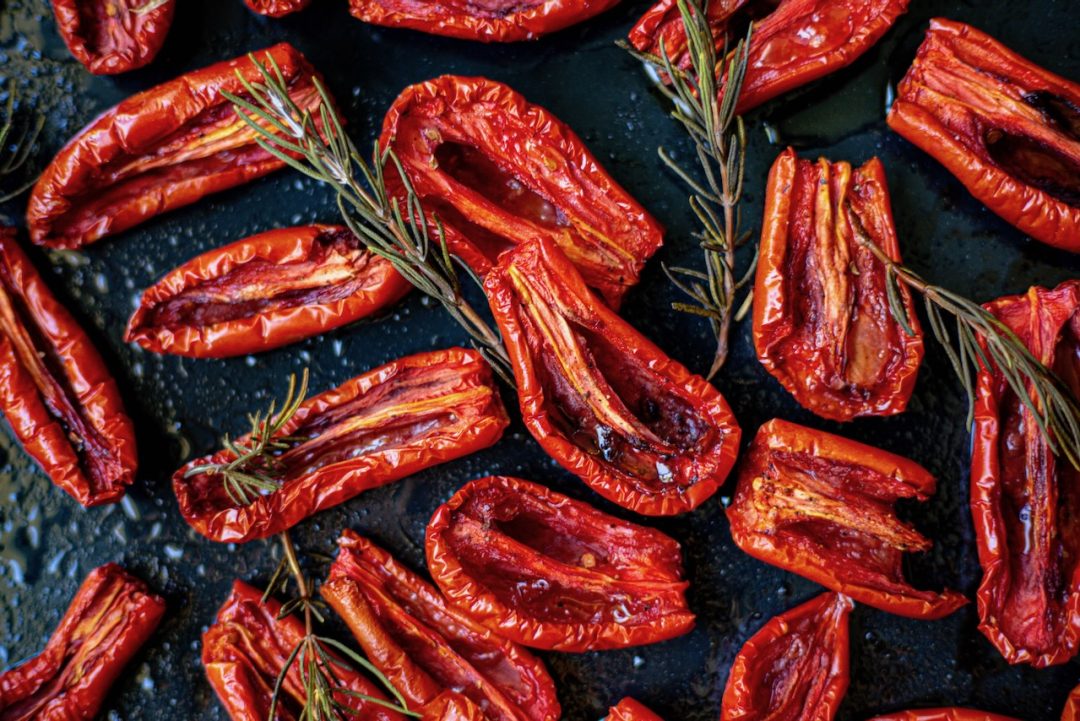
Summer tomatoes, how I adore them! When they’re ripe, fragrant, and sun-kissed, they hardly need much to be delicious. A pinch of salt, a drizzle of olive oil, and I’m already sold! But there’s another way to fully enjoy these tomatoes when the season is in full swing: drying them at home. This method, known as making dried tomatoes at home, allows you to savor the taste of summer all year round.
Why make homemade sun-dried tomatoes?
Drying your tomatoes is a delightful way to extend the tomato season.
During the summer, tomatoes are abundant. Sometimes we buy a few too many, or our gardens yield a bumper crop, leaving us with more tomatoes than we know what to do with.
Instead of letting them spoil, drying allows us to transform them into an entirely different ingredient.
By removing a significant portion of their water, we naturally concentrate their flavors. The tomato becomes denser, more aromatic, and slightly sweet.
Moreover, dried tomatoes have this incredible ability to instantly add character to a dish.
A few pieces in a salad, sauce, pasta, or savory tart can completely change everything!
Which tomatoes to use for making sun-dried tomatoes?
All tomatoes can be dried, but some varieties are especially interesting.
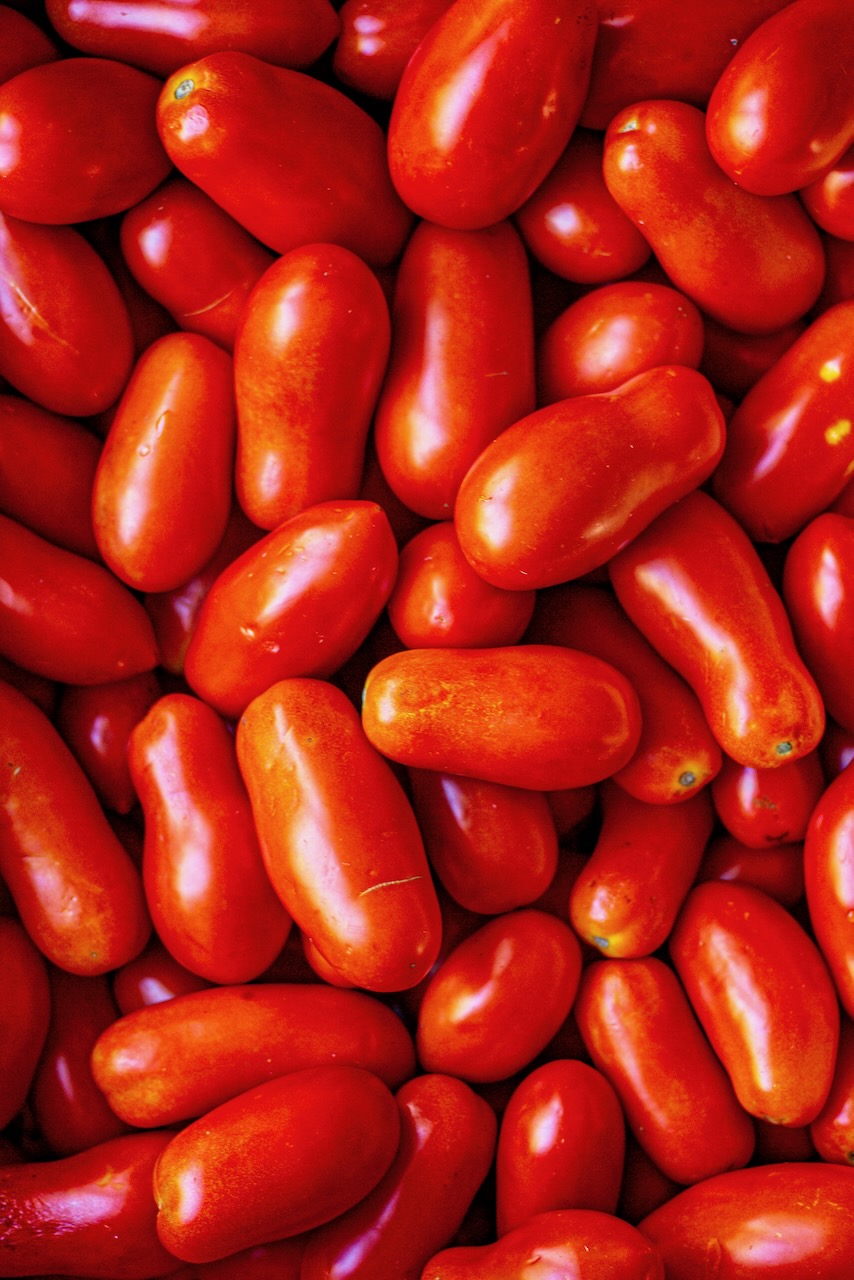
I particularly prefer ripe, fragrant, and relatively meaty tomatoes that have a reasonable amount of water. Elongated tomatoes, such as Roma tomatoes, are especially well-suited for this preparation.
The key is to start with a tomato that has flavor.
Drying will concentrate the flavors: if your tomato is delicious before drying, it will be even more enticing afterward.
Conversely, a bland tomato will rarely yield an exceptional dried tomato.
So, this is the perfect time to enjoy those wonderful summer tomatoes, whether from your local markets or fresh from your garden when they are at their peak ripeness.
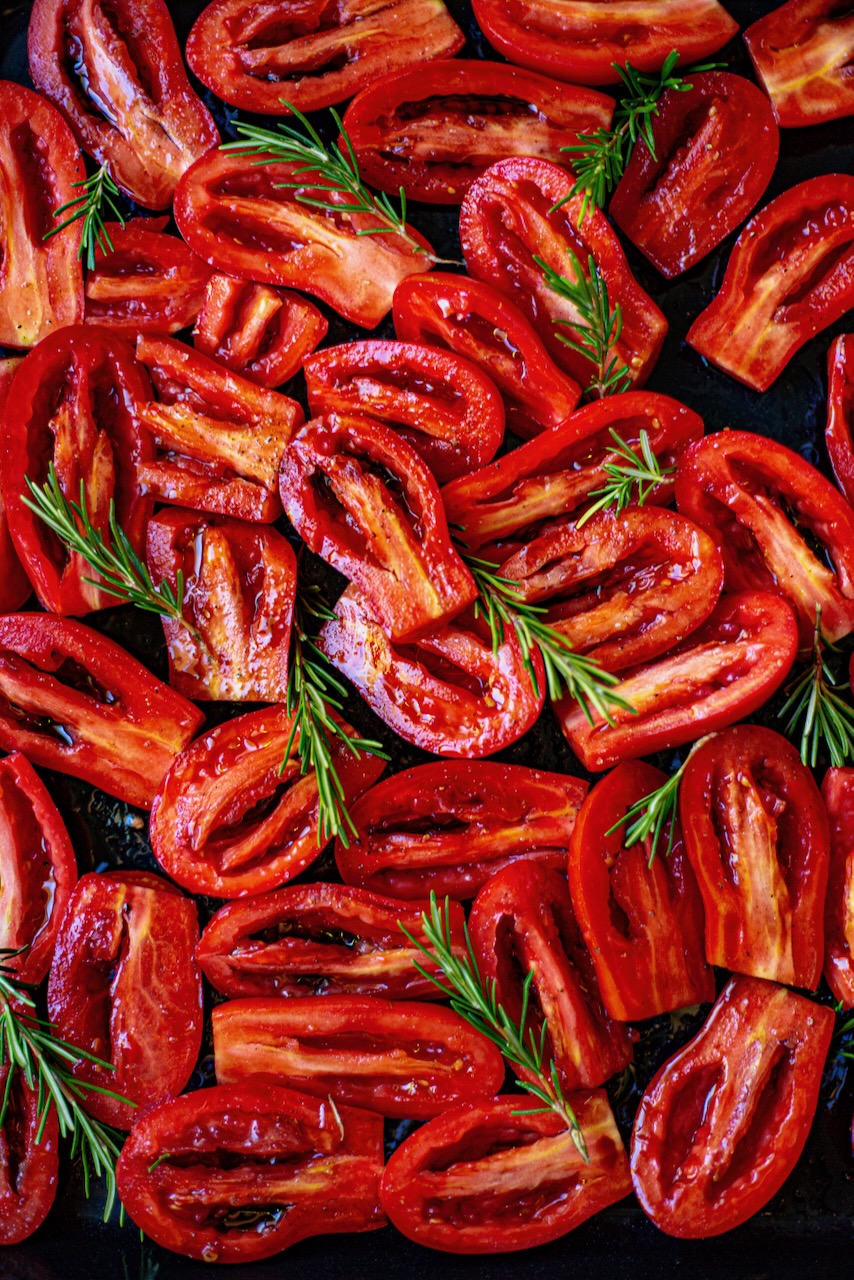
How to make sun-dried tomatoes at home?
The process is quite simple: we cut the tomatoes, season them, and then we let them dry slowly at a low temperature.
The goal is not to roast them.
We aim to gradually evaporate their water to maintain a pleasant texture and concentrate their flavor.
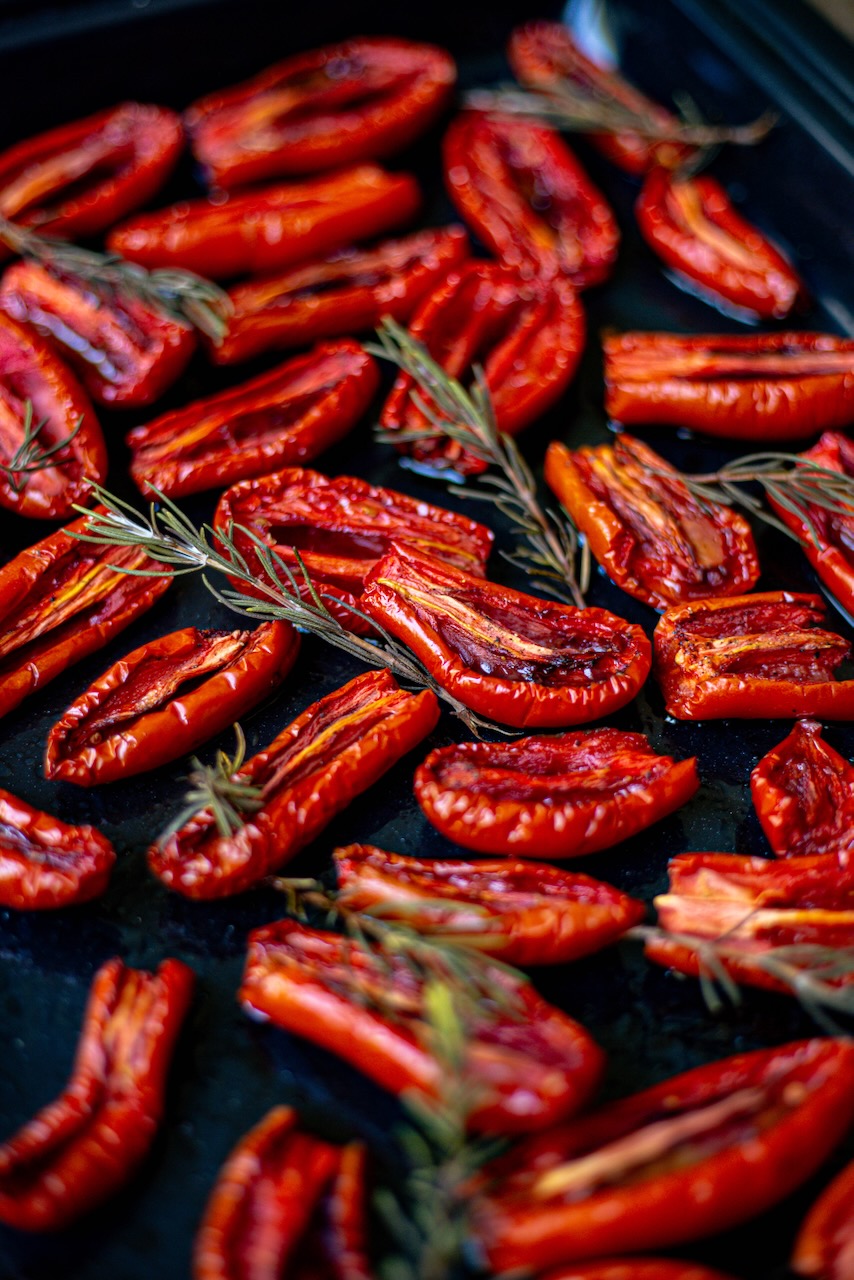
Depending on the size and variety of the tomatoes, the drying time may vary. That’s why it’s crucial to rely more on their appearance and texture rather than adhering to a strictly defined duration.
They should be dried enough to be properly preserved while retaining a pleasant texture and authentic tomato flavor.
You’ll find all the specific instructions in the recipe card below.
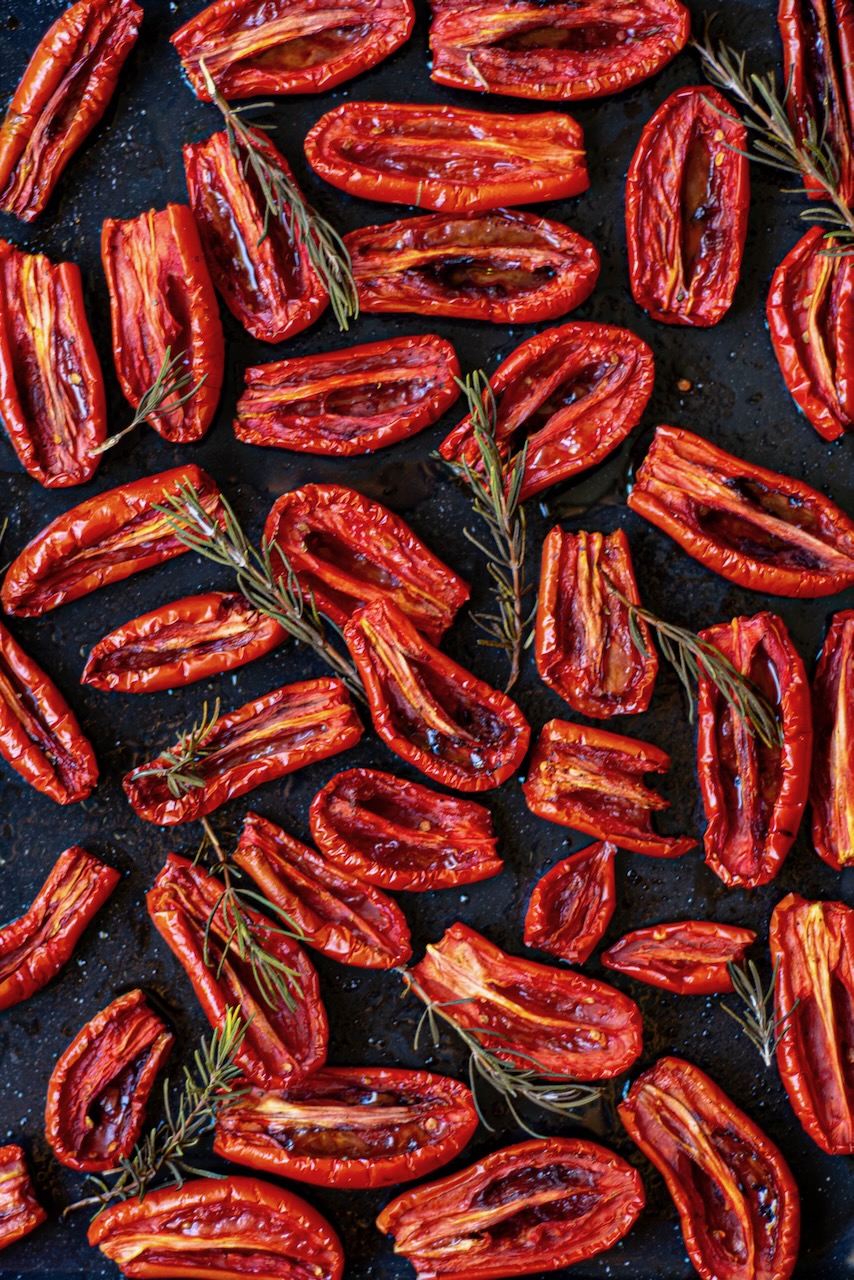
Drying completely transforms the tomato
It’s fascinating to see how much a tomato can change during the drying process.
It loses a considerable amount of volume and becomes much more concentrated.
The texture turns denser and slightly chewy, while the flavor intensifies.
This transformation is what makes dried tomatoes so versatile in cooking: they become a powerful condiment.
A little goes a long way; just a few pieces can effectively flavor an entire dish.
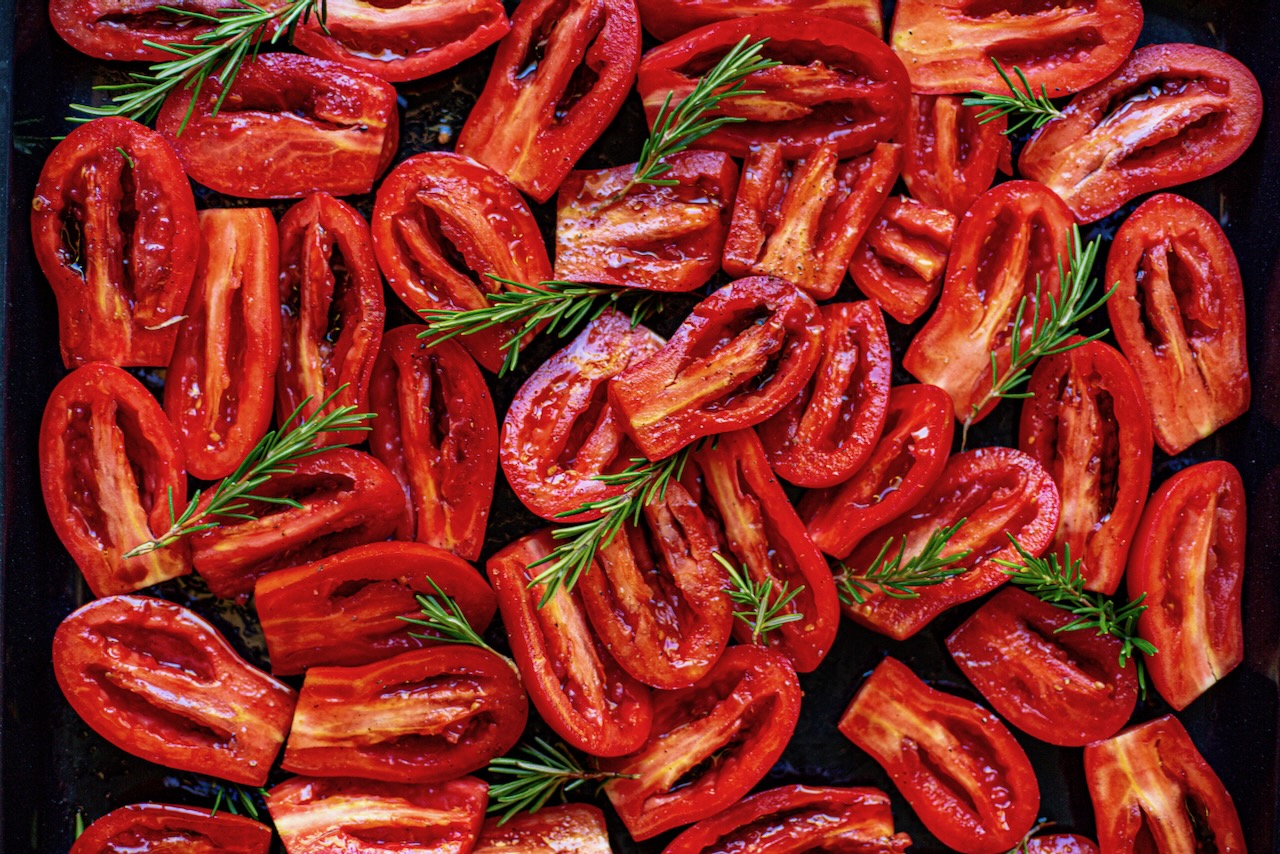
How to use sun-dried tomatoes?
This is probably my favorite part!
Once your dried tomatoes are ready, you can incorporate them into an incredible variety of recipes.
They shine in pasta, but the possibilities don’t stop there.
Think of salads, tarts, quiches, savory cakes, pizzas, focaccias, omelets, or even roasted vegetables.
They are also ideal for making pesto or a spread.
When it comes to pairings, dried tomatoes particularly love basil, garlic, parmesan, mozzarella, feta, olives, eggplant, and zucchini.
In short, whenever you want to add a Mediterranean touch to a dish, think of sun-dried tomatoes!
Dried tomatoes and olive oil: the classic duo
Once the dried tomatoes are prepared, we naturally think of storing them in olive oil.
This is a particularly indulgent combination. The oil softens the tomatoes and adds an abundance of flavor.
And when the tomatoes have infused their flavor into the oil, it can become delightful in a vinaigrette or as a dip for crusty bread.
However, caution is necessary with homemade vegetable preserves in oil.
The oil creates a low-oxygen environment in which certain bacteria, notably Clostridium botulinum, can develop under certain conditions. Thus, simply covering tomatoes with oil should not be considered a foolproof long-term preservation method.
For oil preservation, it is important to follow a validated method to ensure safety, respecting all preparation and storage conditions without improvisation at room temperature.
Personally, I have another method that I particularly enjoy.
My favorite method: freezing sun-dried tomatoes
You’ve come to know that I prefer simple and practical solutions!
For sun-dried tomatoes, I choose to freeze them.
Once the sun-dried tomatoes are dried and completely cooled, I portion them out and place them in the freezer. Vacuum sealing is ideal as it allows for better quality preservation.
This method is incredibly convenient.
Why?
Because I can simply take out only the amount I need.
Need a few tomatoes for a salad? Perfect.
A handful for a pasta sauce? Great.
A larger quantity for a focaccia or savory pie? Just grab an extra bag.
No need to open a large jar, no need to store the tomatoes in oil, and most importantly, no need to decide in summer how I will use them several months later.
A nice idea to avoid waste
Making sun-dried tomatoes at home is also an excellent way to combat food waste.
When tomatoes are plentiful, it’s easy to either buy too many or find ourselves with a particularly abundant harvest.
Drying allows you to transform surplus into an ingredient that can be enjoyed for months.
Unlike fresh tomatoes, just a few pieces of dried tomatoes can suffice to flavor an entire dish.
This is a particularly worthwhile preparation to make at the end of summer when tomatoes are still abundant and bursting with flavor.
So, olive oil or freezer?
Both methods are effective, but for everyday family use, I prefer freezing.
Preserving in olive oil yields particularly moist and flavorful tomatoes, but it requires adhering to specific food safety guidelines.
Freezing, on the other hand, is straightforward and allows for portioned preservation, ready to use as needed.
This is the method I choose to use at home.
And which method do you prefer?
One thing is clear: if you have beautiful, ripe tomatoes on hand, don’t let them go to waste!
Dry them, freeze them, and you’ll be so glad to find them in a few months.
Let’s make the most of summer!
The recipe, Chef!
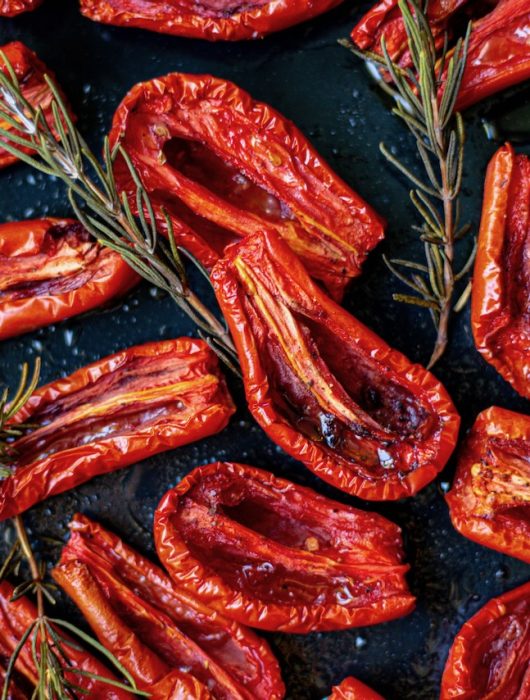
Homemade dried tomatoes

 ( Vote !)
 Loading...
Homemade dried tomatoes, halved, seeded, and baked in the oven at 100 degrees, seasoned with olive oil, vinegar, salt, and thyme or rosemary.
Ingredients
- Ripe tomatoes
- Olive oil
- 1 tablespoon of raspberry vinegar or balsamic vinegar
- Salt
- Thyme or rosemary
Instructions
Preheat your oven to 100 degrees.
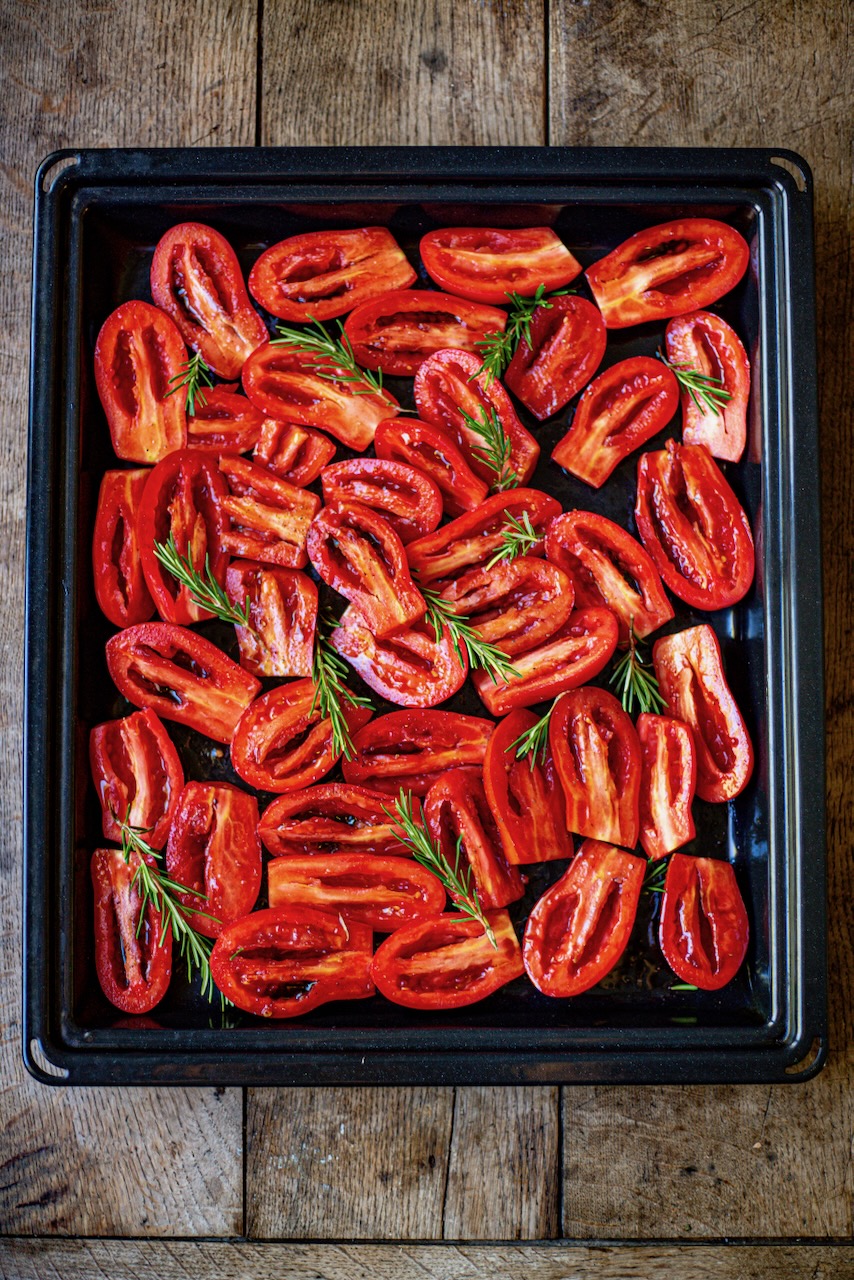
Cut your tomatoes in half lengthwise.
Remove the tomato stem and seeds. You can use a paper towel to soak up as much liquid as possible.
Place your tomatoes on a baking tray.
Pour a good drizzle of olive oil, vinegar, salt, and herbs.
Mix well, spread the tomatoes out again on the tray, and bake for 2 hours and 30 minutes.
After this time, check your tomatoes. If they are not dry, continue for an additional 15-minute intervals.
FAQ
How to make sun-dried tomatoes at home?
Dried tomatoes are made from ripe tomatoes that are seasoned and then slowly dried at a low temperature to evaporate a large portion of their water and concentrate their flavors.
Which tomatoes to use for making sun-dried tomatoes?
Choose very ripe, fragrant, and relatively fleshy tomatoes. Elongated varieties with low moisture content are particularly suitable for drying.
Can home-dried tomatoes be frozen?
Yes. Once completely cooled, the sun-dried tomatoes can be divided into small portions and stored in suitable freezing containers. This is my preferred method for preservation.
Can dried tomatoes be preserved in olive oil?
Yes, but this method requires special precautions. Vegetables preserved in oil can pose a microbiological risk if the preparation and storage conditions are not properly managed.
How to use sun-dried tomatoes in cooking?
Dried tomatoes are delicious in pasta, salads, savory tarts, cakes, pizzas, focaccias, pestos, sauces, and numerous Mediterranean recipes.
Should dried tomatoes be thawed before use?
Not necessarily. For hot preparations, they can often be used directly from frozen. For cold dishes, it’s best to let them thaw before use.


No Comments