Friends,
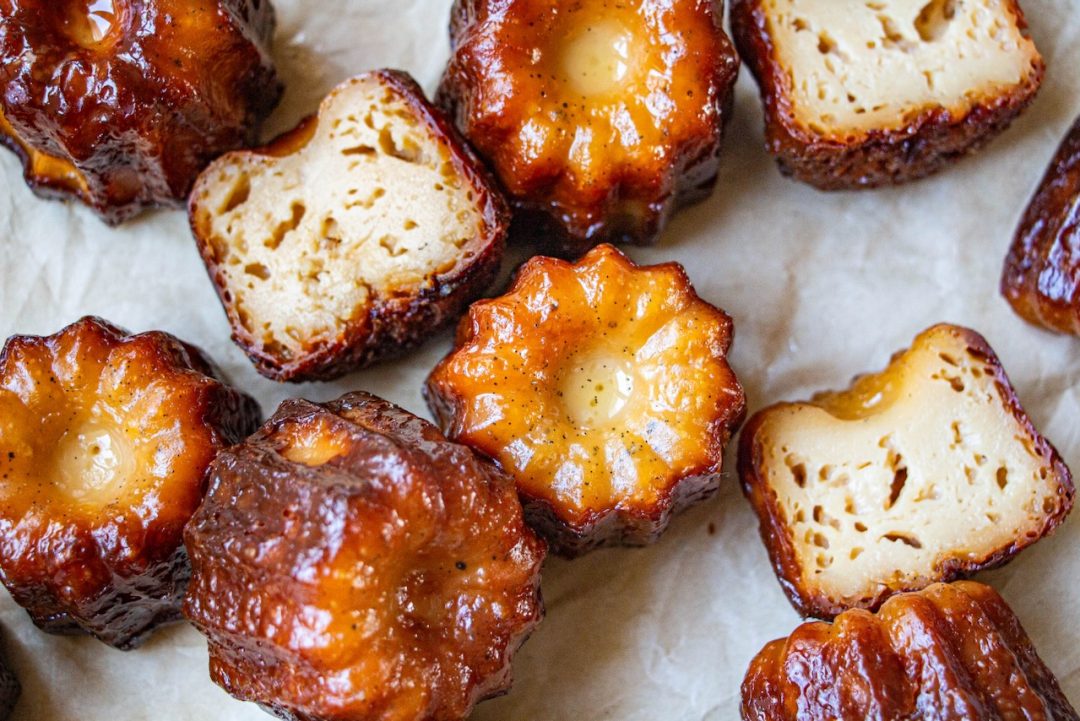
I must admit, sometimes I get tired… I’ve always claimed that I didn’t like canelés. But why?? Perhaps I was stuck with a bad tasting of low-quality canelés? I can’t quite remember… Yet, they are truly delicious when made properly! So here is my perfect traditional recipe for Bordeaux canelés.
The Origin of Bordeaux Canelés
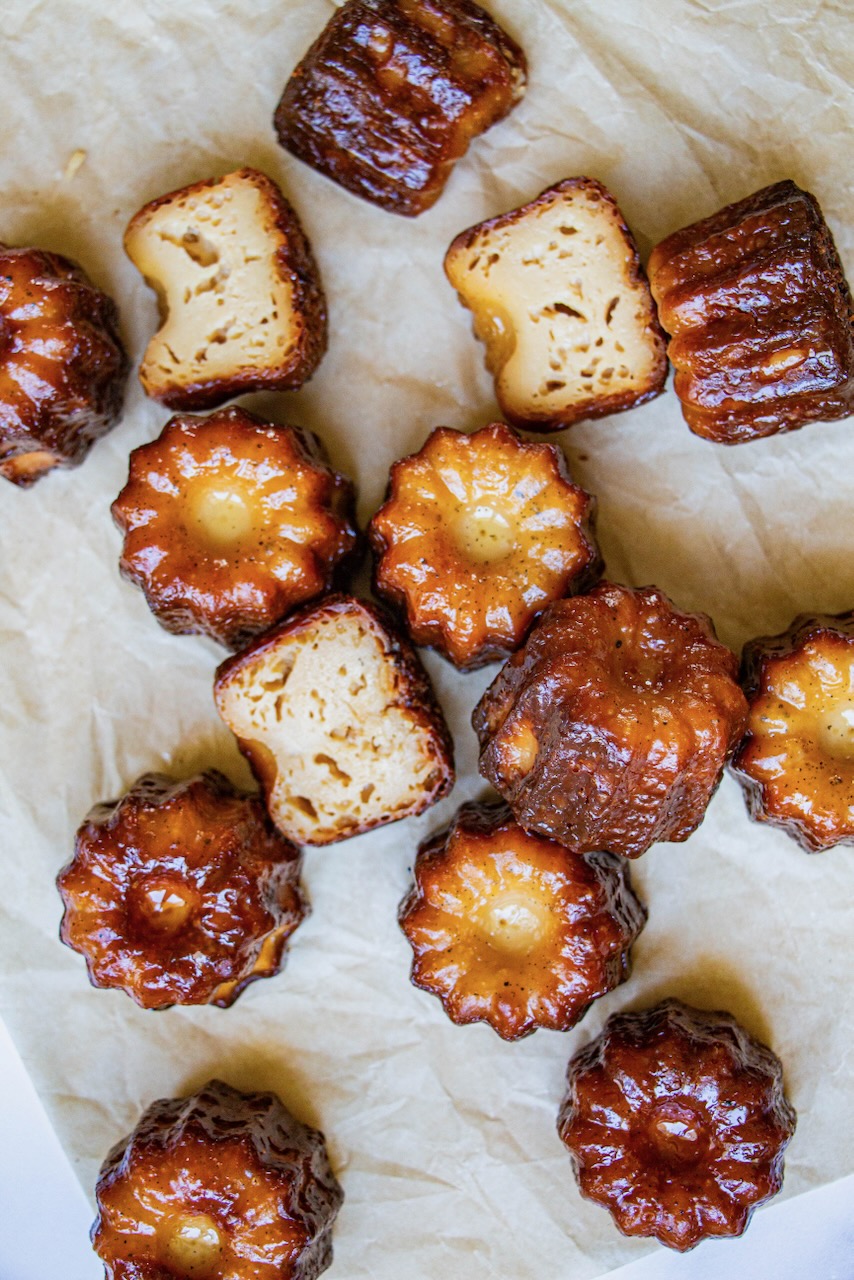
The canelé bordelais, a small caramelized cake with a crispy crust and a tender center, is one of the most iconic specialties of Bordeaux. Its characteristic shape, achieved using a copper canelé mold, and its distinctive texture make it a treat cherished far beyond the borders of Aquitaine. However, its precise origin remains somewhat of a mystery even today.
The Story
The most frequently cited tale traces the canelé’s origins to the 18th century, where it is said that the nuns of the Annonciades convent in Bordeaux made small cakes called « canelas » or « canelats, » using flour and egg yolks. These ingredients were common in the region, particularly due to winemaking activities: egg whites were used to clarify wine, leaving a surplus of yolks. Rum, which arrived via the port of Bordeaux, and vanilla, also imported, gradually enriched the recipe.
Today
The canelé as we know it today, with its flavored batter baked at high temperatures in a copper mold, emerged in the early 20th century. The name « canelé » was officially adopted in the 1930s, as Bordeaux pastry chefs refined the recipe to achieve the perfect balance of caramelized crust and soft interior.
Long considered understated, the canelé experienced a true revival at the end of the 20th century, thanks to the Brotherhood of Canelé of Bordeaux, created to protect and promote this specialty. Today, it is a beloved local institution, enjoyed at breakfast with coffee or as a delightful end to a meal.
A symbol of Bordeaux’s culinary indulgence, the canelé perfectly embodies the richness of French regional cuisine.
Let’s Return to the Recipe for Bordelais Canelés.
This recipe is not difficult in itself, but you must follow a few key rules. Without them, your canelés may not meet expectations. But don’t worry! I’ll guide you through it all!!
The ingredients are straightforward, and you likely have most (if not all) of them in your cupboards or fridge.
My Tips for Making Perfect Bordeaux Canelés Every Time (Answers to Frequently Asked Questions)
Is Rum Essential?
I have to answer this with a yes and no.
No, rum is not essential in making the canelé batter, but it is traditionally used and plays a significant role in the final flavor.
It adds a characteristic aromatic note, warm and slightly sweet, that pairs beautifully with vanilla. It is part of the classic recipe for Bordeaux canelés, contributing to their unique and recognizable flavor.
If you prefer not to use alcohol (for taste, health, or any other reason), it is perfectly fine to substitute or omit it:
-
With orange juice or a hint of orange blossom for a fragrant touch.
-
With almond extract, extra vanilla, or even a splash of non-alcoholic rum.
-
You can simply leave it out: the canelés will still be delightful but slightly less distinctive.
The Resting Time: The First Key to Successful Bordeaux Canelés
Honestly, if you remember only one piece of advice, let it be this: the resting time of the canelé batter may seem excessive. I recommend a rest of 24 hours. I’ve even encountered recipes from master chefs that let the batter rest for 48 hours. This allows for a well-developed batter in terms of aroma and texture. Don’t skip this step!
Cooking: The Second Key to Successful Bordeaux Canelés
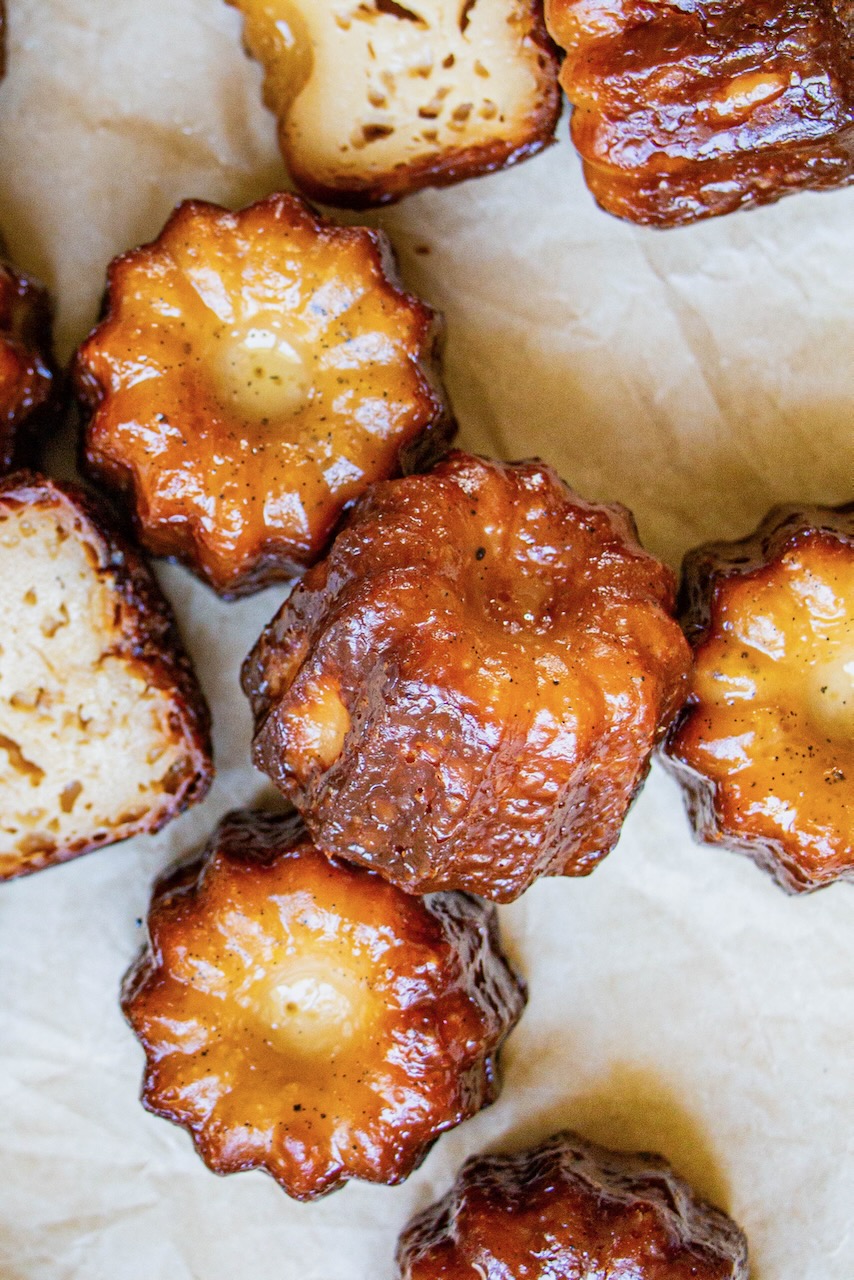
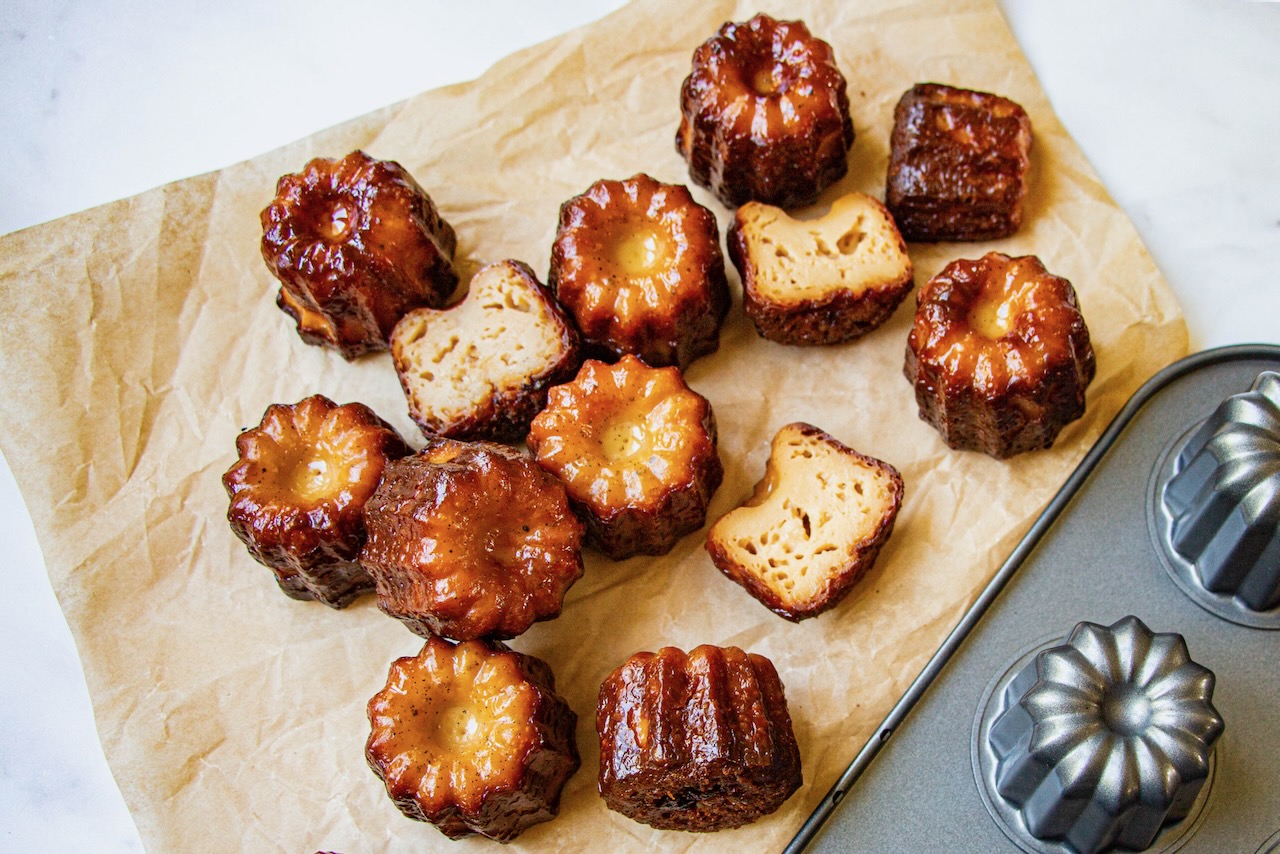
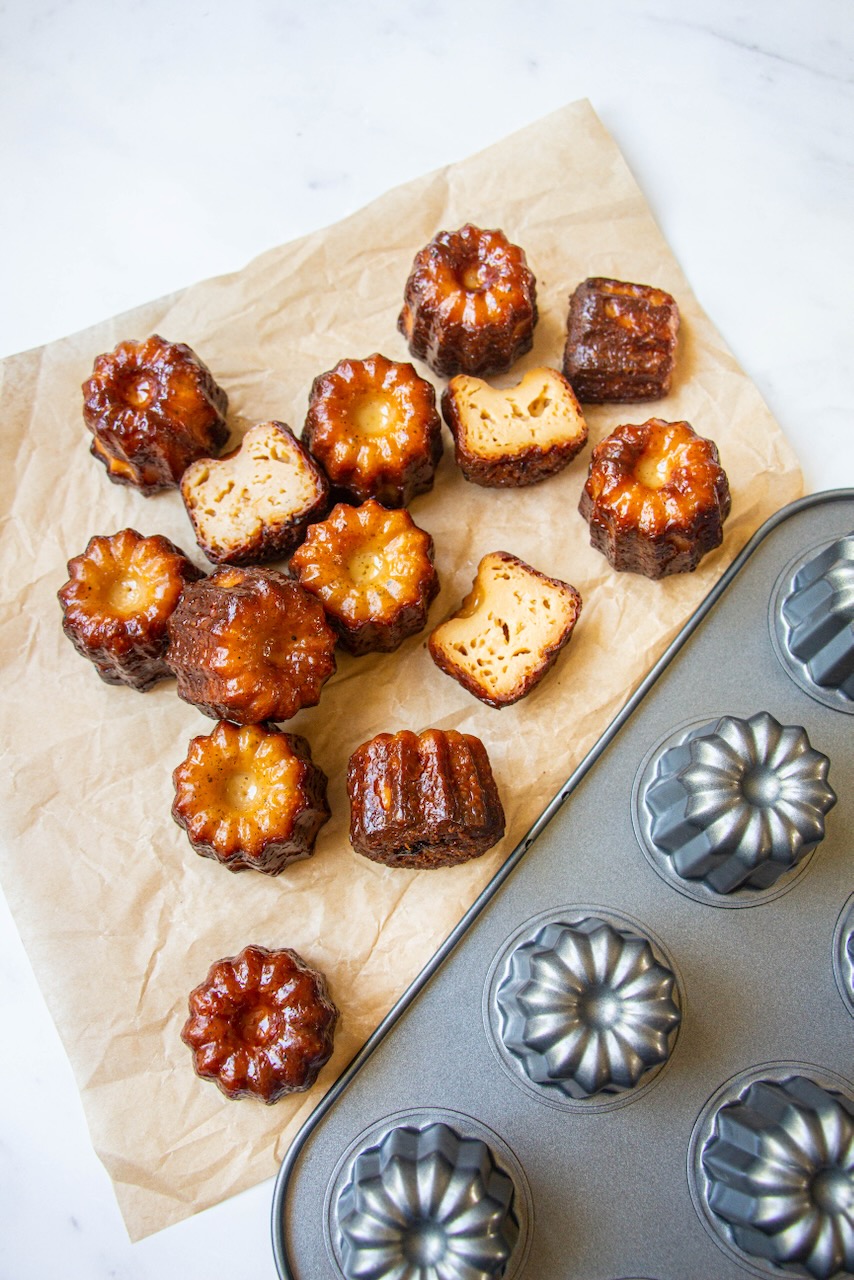
Baking canelés isn’t a straightforward process. You’ll start by placing them in a very hot oven. After 10 minutes, you’ll lower the oven temperature. This method triggers the caramelization of the batter while also setting the edges, allowing the center of the canelé to develop properly during the baking process. The test will be visible upon cutting; you’ll see if you’ve achieved that iconic structure.
My Tasting Advice
I believe one reason I didn’t like canelés (until now!!) is that I must have eaten some that were a bit stale… Bordeaux canelés are best when freshly made.
Let them cool on a wire rack and enjoy them while they’re just slightly warm. That’s when you’ll experience the maximum flavor! The contrast of the crispy caramelized crust and the softness of the canelé’s center is simply divine. Honestly, it’s the best way to enjoy them.
How to Store Canelés?
However, if you don’t eat them all right away, don’t worry. They can be stored!
At Room Temperature (1 to 2 Days Maximum)
-
Keep them in a metal box or an airtight container, not completely closed (to prevent moisture from softening the crust).
-
Do not stack them: place them upright, ensuring they don’t touch.
-
Avoid the fridge: it will soften the crust and alter the texture.
Freezing (Up to 2 Months)
-
Allow them to cool completely after baking.
-
Wrap them individually in cling film or parchment paper.
-
Then place them in a freezer bag.
-
To enjoy them, heat directly in the oven (350°F for 5 to 8 minutes) without thawing to regain a bit of crispiness.
Other Homemade Pastry Recipes to Explore
If you enjoy Bordeaux canelés and homemade pastry recipes, you should also find happiness among my other delicious recipes. For a fruity and chocolatey treat, discover my Pim’s-style raspberry biscuits, featuring a fruity heart and a delicate chocolate shell. French pastry enthusiasts can admire my financiers, my madeleines, or even my macarons, all classic recipes to create at home.
To evoke nostalgic snack memories, I also suggest my chocolate hazelnut biscuits style BN, perfect for a tasty break, alongside my homemade cookies. And if you’re in the mood for something a bit more original, try my cookie fries: a playful and indulgent twist on the traditional cookie.
To create a lovely assortment of homemade cookies to enjoy with coffee, tea, or to be shared during snack time.
The Necessary Utensils:
A saucepan,
One paring knife,
A cutting board,
One mixing bowl,
A whisk,
Plastic wrap,
And canelé molds.
There you have it; I’ve shared everything with you. This article is a bit longer than the others, but as you can see, it’s essential to cover all the details for making delicious Bordeaux canelés.
The recipe, Chef!
Bordeaux canelés
 ( Vote !)
 Loading...
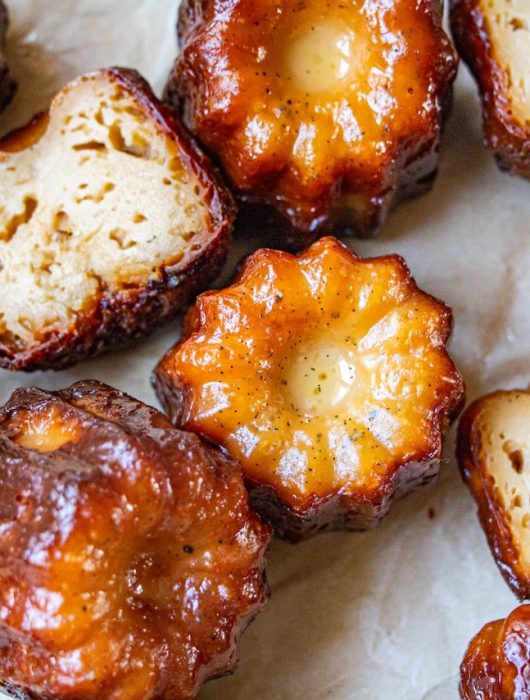
Traditional Bordeaux canelés, made with a batter of milk infused with vanilla, eggs, flour, and rum, resting for 24 hours in the refrigerator before being baked in well-buttered molds.
Ingredients
- 1/2 liter of milk
- 100 g of sugar
- 1 vanilla bean
- 40 g of butter
- 2 eggs
- 2 egg yolks
- 100 g of sugar or brown sugar
- 100 g of flour
- 50 g of rum
Instructions
To make the batter, start by pouring the milk and 100 g of sugar into a saucepan. Add the vanilla pod cut in half and the scraped vanilla seeds with the help of a knife. Heat it up. Remove from heat just before boiling. Add the butter cut into small pieces and mix until the butter is completely melted. In a mixing bowl, put the 2 eggs and the 2 egg yolks with the other 100 g of sugar (or brown sugar). Whisk well and add the sifted flour. Mix well. Pour over the milk/sugar/vanilla/butter mixture. Mix until you have a nice homogeneous texture. Finally, pour in the rum and mix again. Cover the dough with plastic wrap and refrigerate for 24 hours (or one night if you don't have time). Preheat your oven to 220 degrees static heat. Remove the vanilla pod, extracting as many seeds as possible. Mix the dough again. Pour it into your well-buttered canelé molds up to 3/4 of the height. Bake for 10 minutes, then lower the oven temperature to 180 degrees fan heat. Bake for another 45-50 minutes. Let cool, then unmold.
No Comments