Hello foodies,
At the end of the day, opening the fridge for some inspiration often leads to a sigh. What are we going to put on the plates of our dear little ones? (And yes, it works just as well for the brown-haired ones 😉 ) You know exactly what I mean…
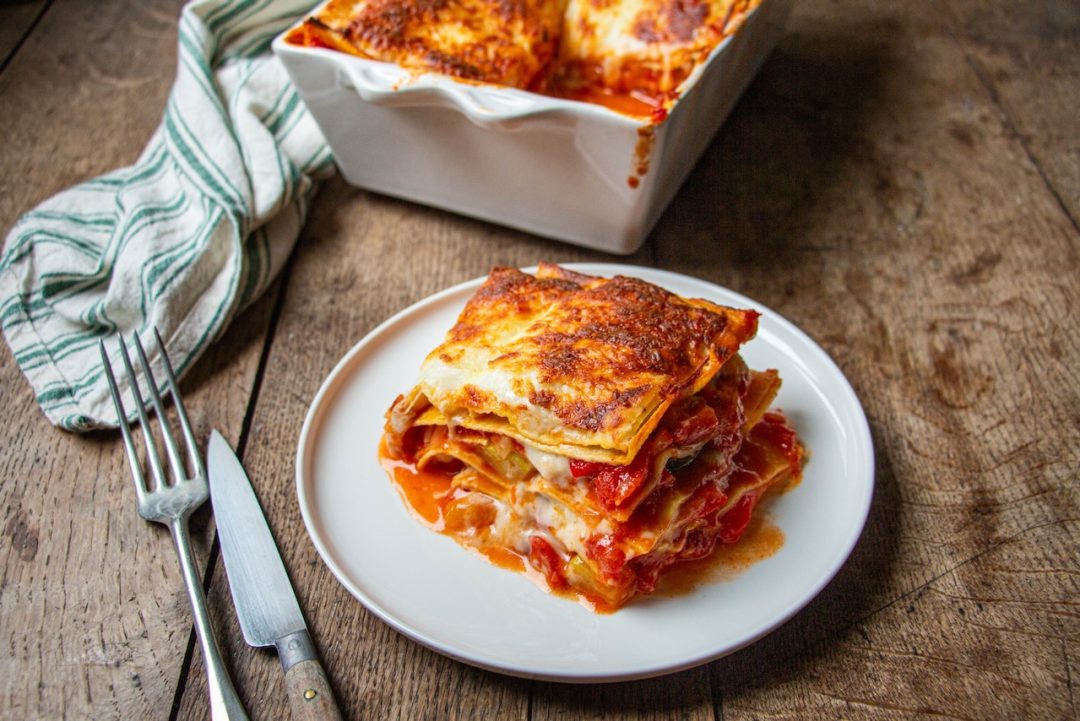
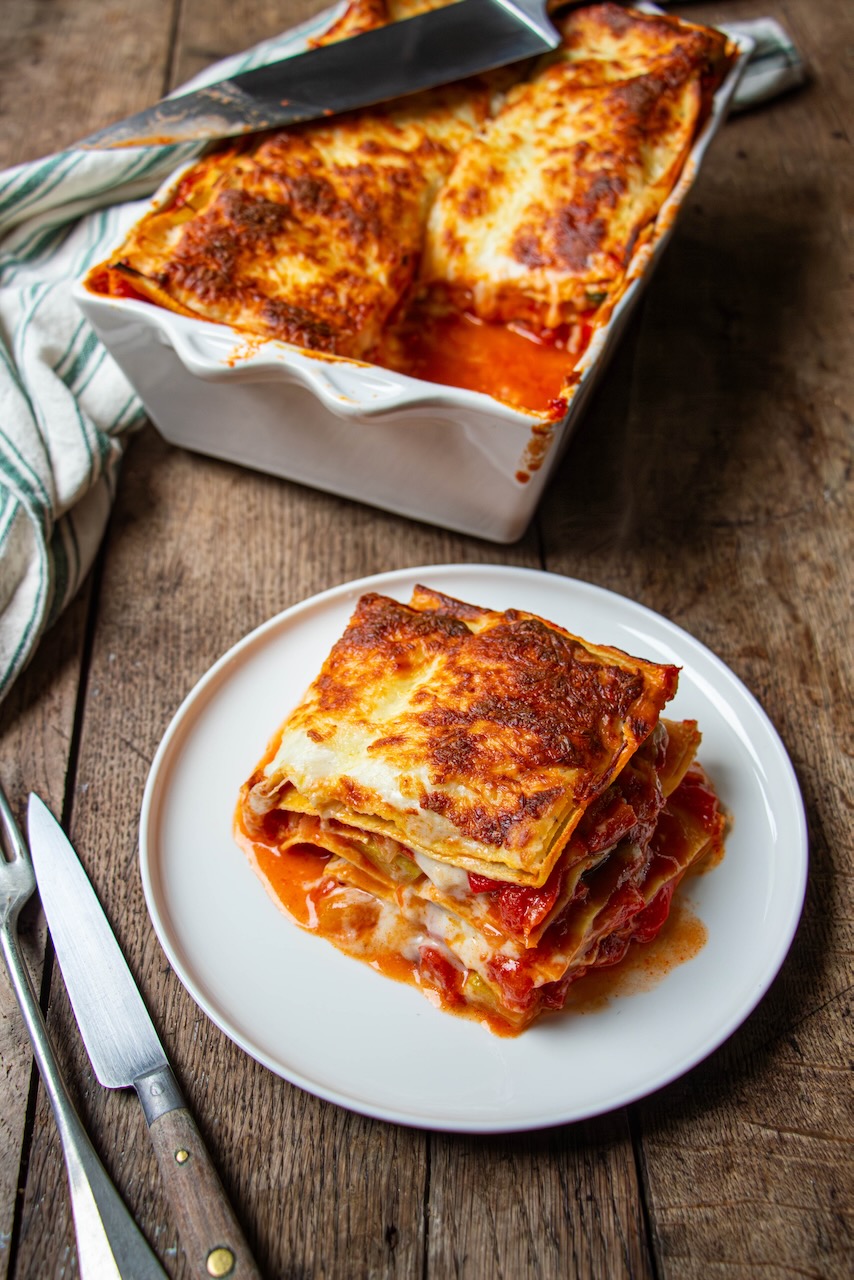
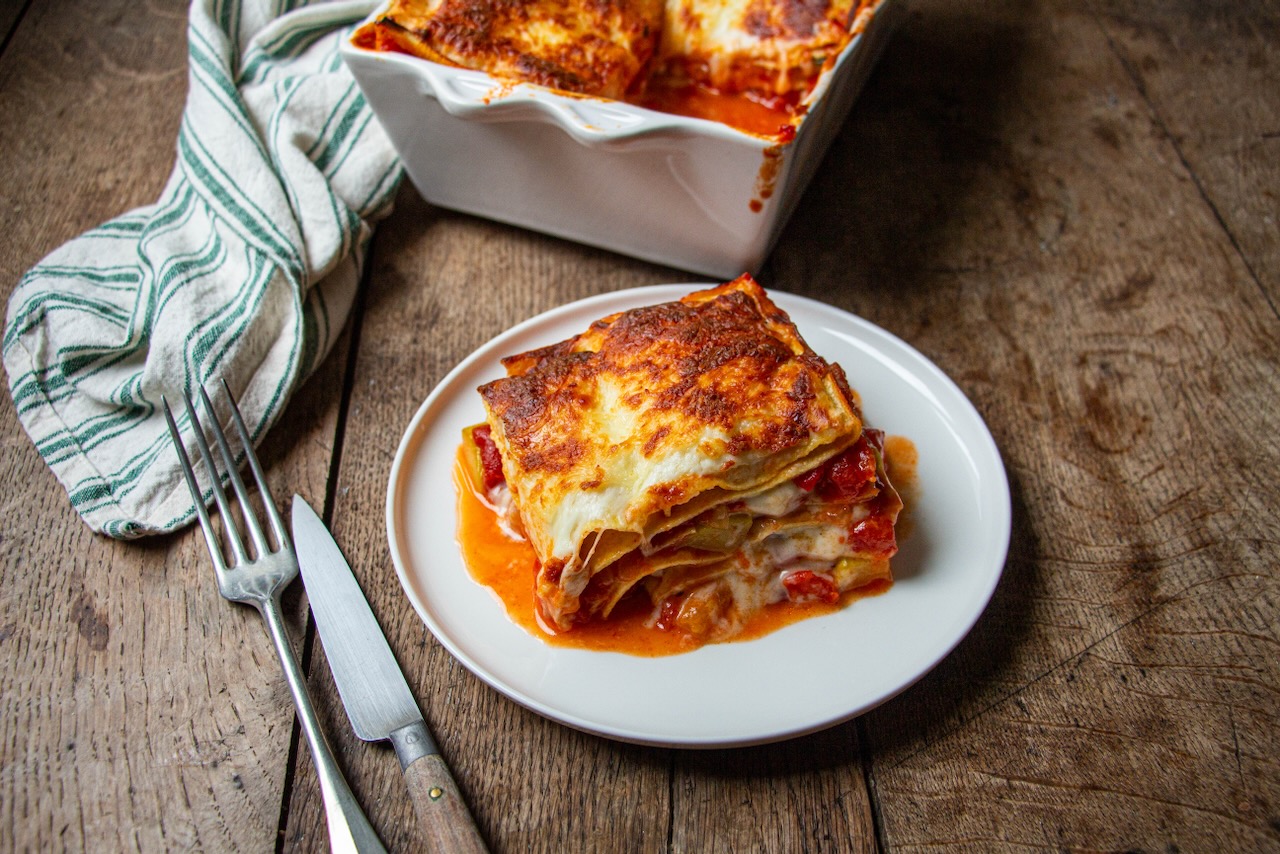
I spot a leftover of fritter with peppers and zucchini, and I see a bottle of milk. Here we go! We’re making The Sun Vegetable Lasagna!
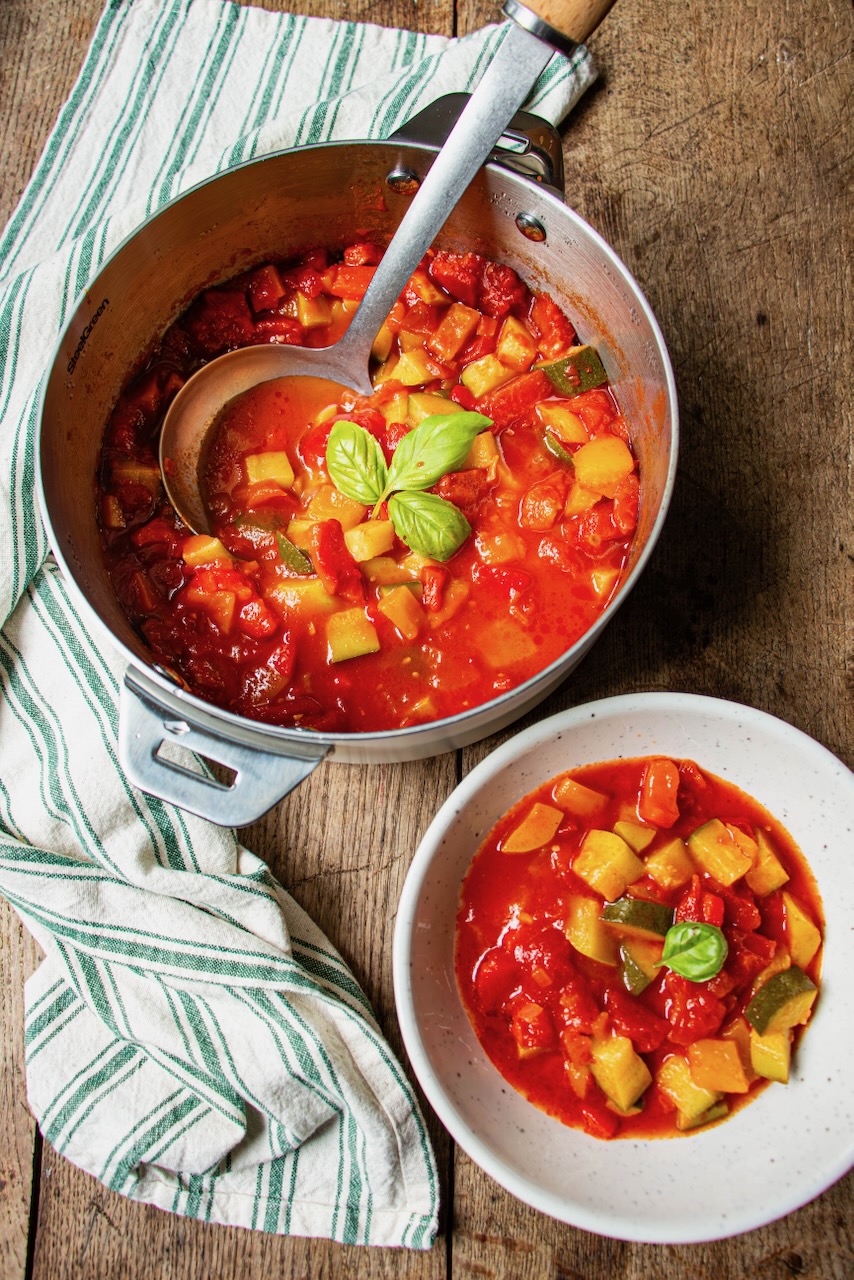
What is fritta?
Spanish fritta is a traditional Mediterranean specialty often compared to French ratatouille. Originating from southern Spain, it finds its roots in rural kitchens where summer vegetables were a staple in daily nutrition.
Originally, fritta was prepared by peasant families using fresh produce harvested from local gardens. Tomatoes, peppers, eggplants, and onions were slowly cooked to create a flavorful, simple, and nourishing dish. This cuisine relied on accessible ingredients and respect for the seasons, characteristics typical of Mediterranean tradition.
Fritta shares several similarities with Spanish pisto, another well-loved Spanish specialty, highlighting the influence of Mediterranean cultures where simmered vegetables are prominent.
Over time, fritta has become a symbol of conviviality and family cooking. Even today, it is cherished for its sunny flavors and authenticity, perfectly representing traditional Spanish culinary heritage.
I often make it because the kids love it!! It’s fantastic with pasta or rice. So, with some leftovers on hand, it replaced the Bolognese sauce in my recipe for meat lasagna. And there you have it! A new recipe, meat-free! My sun-dried vegetable lasagna is always a hit!
Lasagna, a quick recipe
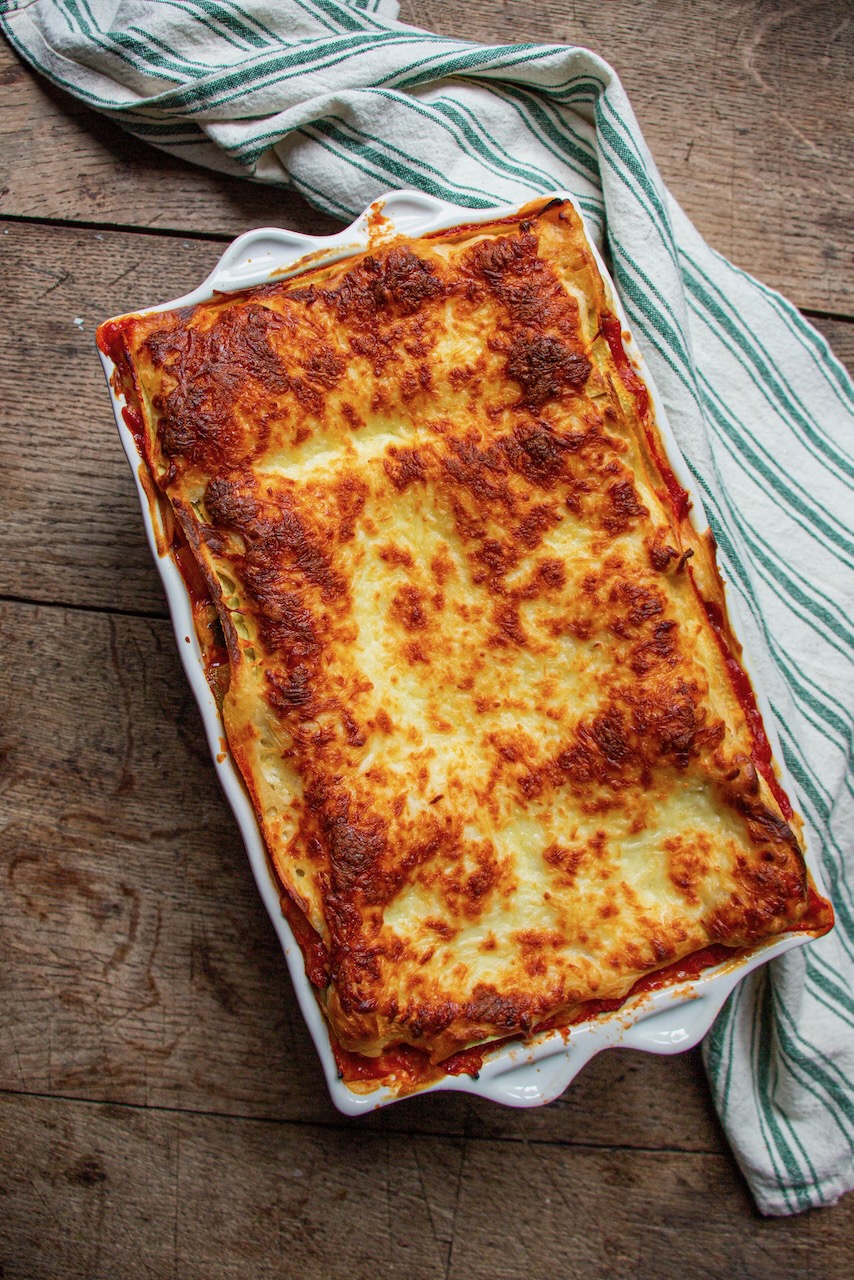
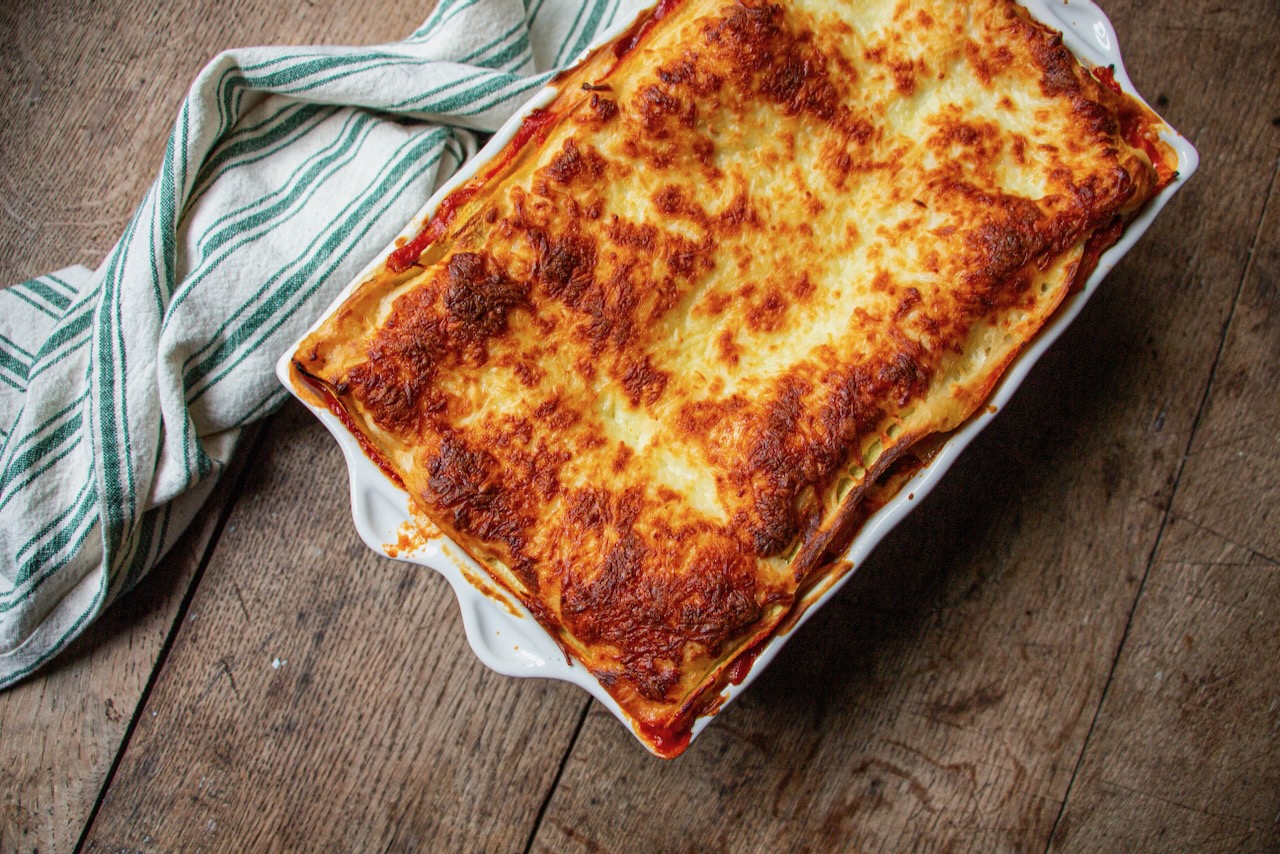
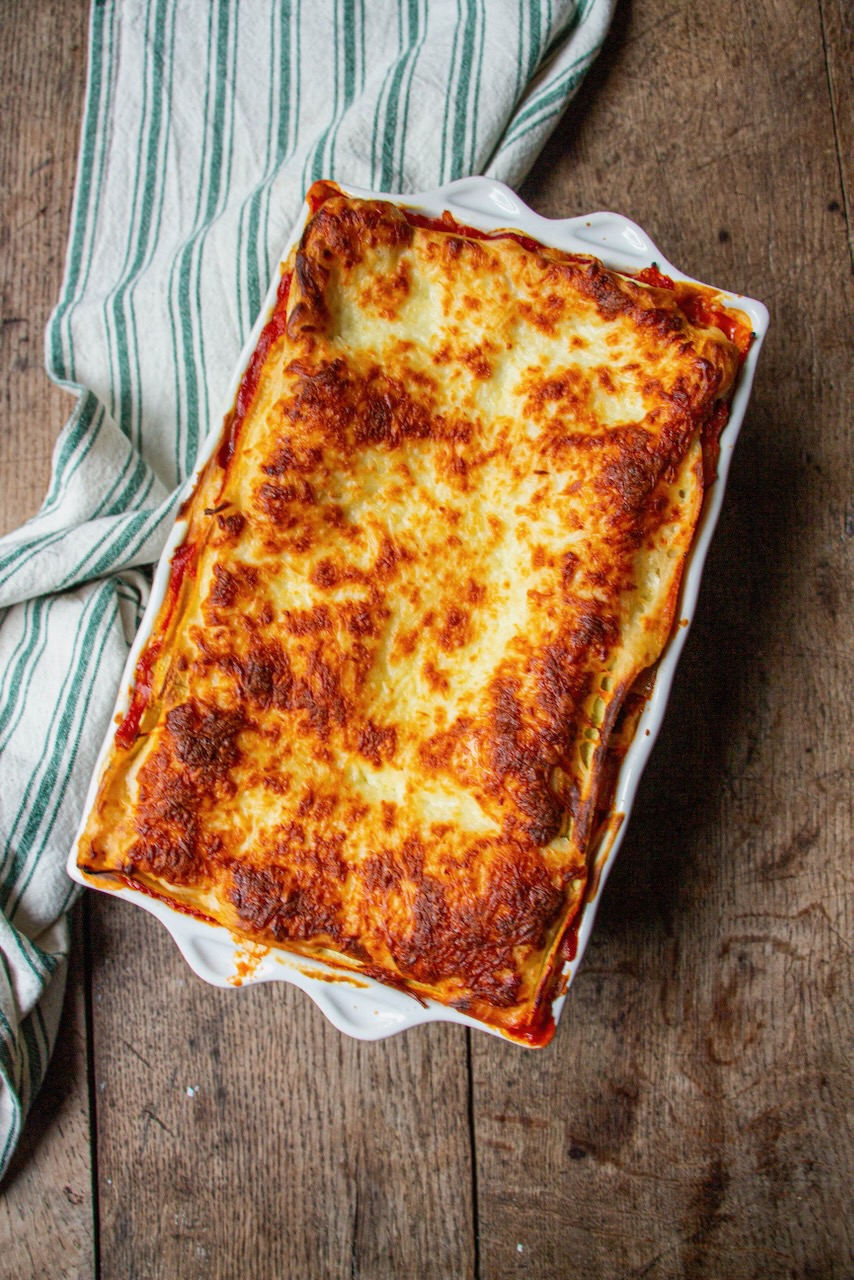
Since my fritta was already made, it took me no more than 10 minutes to prepare my béchamel sauce and assemble my lasagna. Then, I popped it all in the oven for 25 to 30 minutes, and it was done! (Here I share the complete recipe).
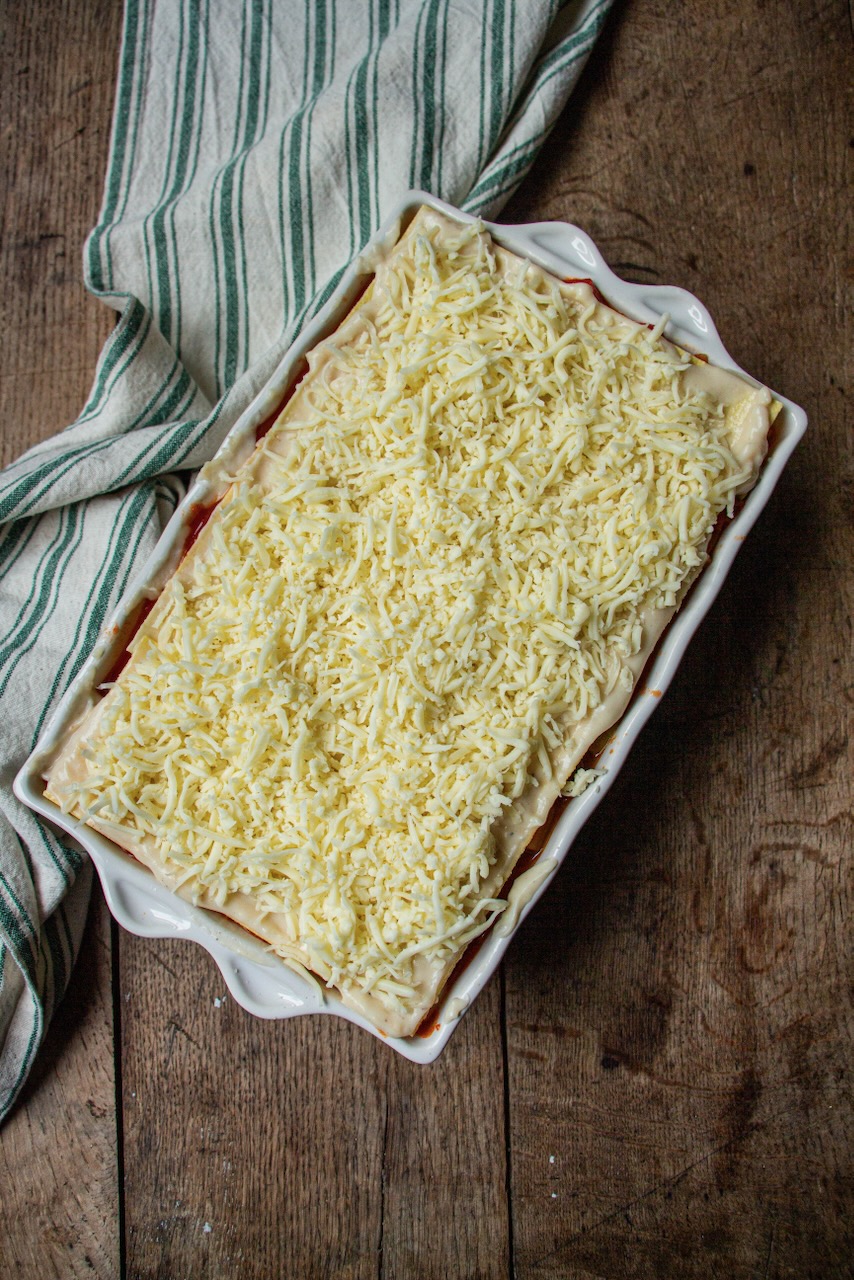
I enhanced my mozzarella with fresh thyme from the garden. It smelled like summer, sunshine on our plates!!
The origin of lasagna
Lasagna is one of the most iconic dishes of Italian cuisine, cherished around the world for its generosity and conviviality. However, its origins date back to antiquity, and its history is much older than one might imagine.
The word « lasagna » is believed to come from the Greek term laganon, which referred to a thin sheet of dough cut into strips. The Romans later adopted this concept by developing layered preparations of dough and fillings. However, the modern lasagna we know today truly took shape in Italy during the Middle Ages.
The Emilia-Romagna region, particularly the city of Bologna, is often heralded as the birthplace of traditional lasagna. It is here that the famous version made with pasta, slow-cooked sauce, and béchamel became a hallmark of Italian cuisine.
Over the centuries, lasagna has spread throughout Italy and beyond. Each region has developed its own variants, with different ingredients and techniques reflecting local traditions.
Today, lasagna symbolizes family cooking and sharing, winning international acclaim for its generous nature, rich flavors, and ability to reinvent itself while staying deeply rooted in Italian culinary heritage.
The main variations of lasagna
Lasagna exists in many variations, with each region and culture putting its own spin on this beloved Italian classic.
The most well-known version is Lasagna Bolognese, typical of the Emilia-Romagna region. It usually features pasta, meat ragout, and béchamel.
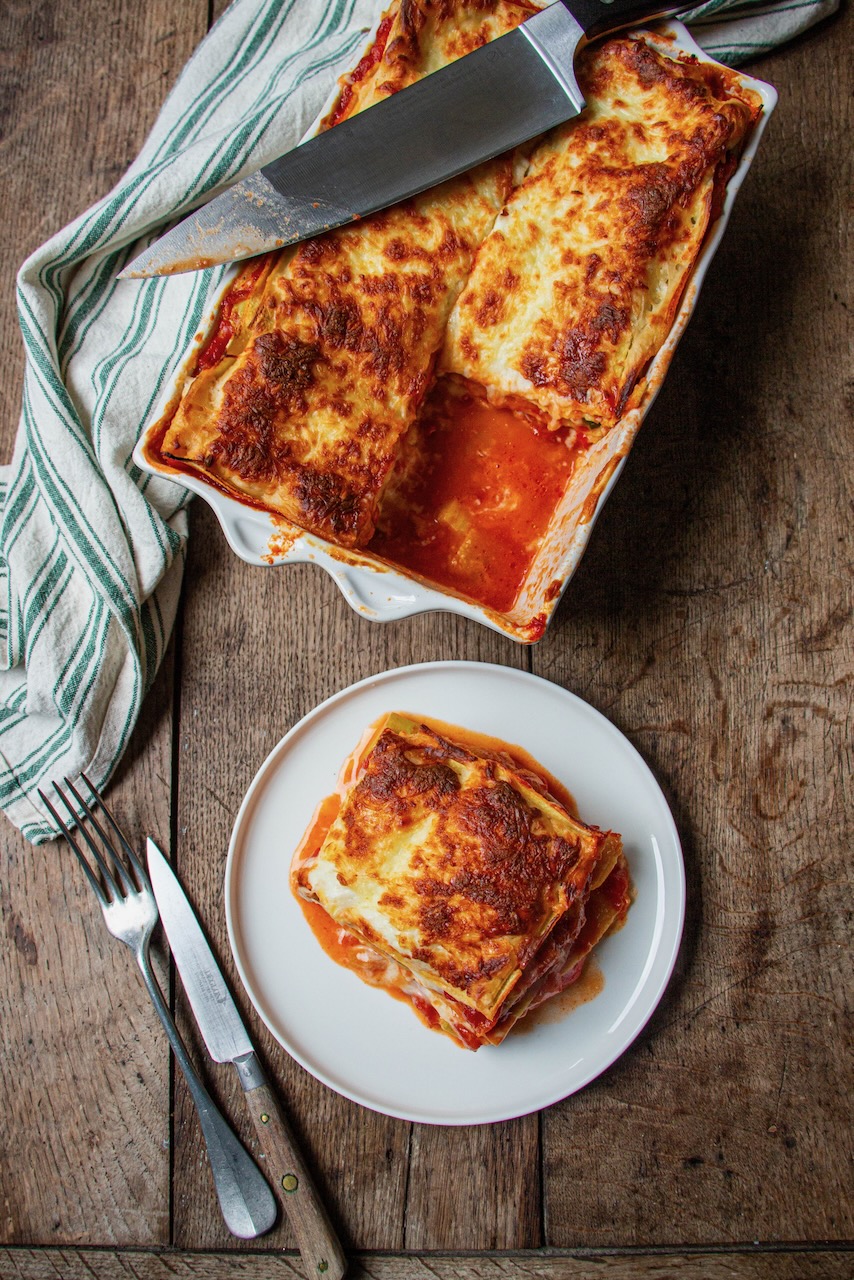
Among popular variations, there are vegetarian lasagnas, crafted with vegetables like zucchini, eggplant, or spinach and mushrooms. They offer a lighter and more colorful alternative. My sun-dried vegetable lasagna falls firmly into this category.
Gourmet enthusiasts, who enjoy modern and refined recipes, will also appreciate salmon or seafood lasagna. These variations offer delicate and creamy flavors. Spinach and ricotta lasagna represents another classic of Italian cuisine, beloved for its sweet and balanced flavors.
Finally, some regions of Italy have unique traditions, featuring recipes that employ different sauces, cheeses, or pasta types.
Lasagna is a dish that caters to all tastes while embodying conviviality and generosity on the plate. Everything I adore!
The necessary utensils:
– My Thermomix for béchamel sauce or a good heavy-bottomed saucepan,
– One cutting board,
– A good paring knife,
– One large skillet or a Dutch oven, Staub type (22 cm in diameter),
– A ladle,
– One baking dish.
Let’s skip the chatter…
And let’s get to the recipe, Chef!
Grill your bell pepper in your oven (grill function) on each side. Then put it in a freezer bag and close the bag. After 15-20 minutes, peel the bell pepper, seed it, and cut it into squares. Cut your onion into small pieces and sauté it in olive oil. Add the finely chopped garlic and cook for 1 minute. Add the bell pepper, then the zucchini cut into small cubes and the tomato sauce. Season with spices. Add salt (only add pepper at the end of cooking). Let simmer on low heat for 45 minutes (or more). In the meantime, if you have a Thermomix, go to step 13. Otherwise, melt the butter over low heat in a saucepan. Add the flour and mix well. Pour in the cold milk, add salt, pepper, and grated nutmeg. Let cook over medium heat, whisking continuously until thickened. In the Thermomix, place all the ingredients (flour, milk, butter, grated nutmeg, salt, and pepper) in the bowl. Set for 7 minutes at 90 degrees at speed 4. At the end of the cooking of your fritta, adjust the seasoning and add pepper. Preheat your oven to 170 degrees. Place one (or two) sheets of lasagna at the bottom of a baking dish. The sheet should completely cover the bottom of the dish. Add the fritta well spread over the sheet. Add béchamel sauce. Add more lasagna, fritta, and béchamel again to have at least 3-4 layers of pasta. Finally, cover with pieces of mozzarella and thyme leaves. Put in the oven for 25 minutes. Serve!The Vegetable Lasagna from the Sun

 ( Vote !)
 Loading...
Ingredients
Instructions

No Comments