Hello friends,
Some recipes enter our kitchens because we discover them at a restaurant, others because we taste them during a trip… and then there are those that come to us through a meeting. That’s exactly what happened with this beef pho soup. One of my subscribers, Kim, kindly shared her family recipe with me. I must admit, I adore the stories that accompany recipes. Behind every dish lies more than just a simple list of ingredients; there are families, memories, traditions, gestures passed down, and sometimes even fragments of identity. Today, I invite you to try this large, fragrant, generous, and comforting soup from Vietnam.
Pho, an emblematic soup of Vietnam
If you are not already familiar with pho, you are about to discover a soup that is truly unlike any ordinary soup!
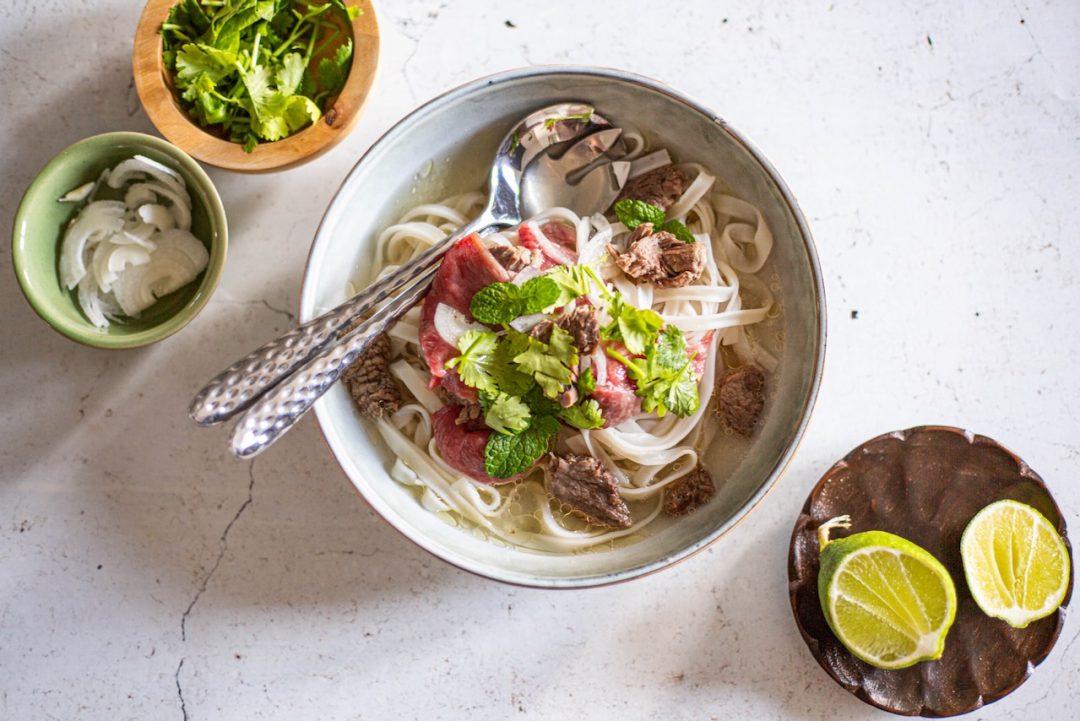
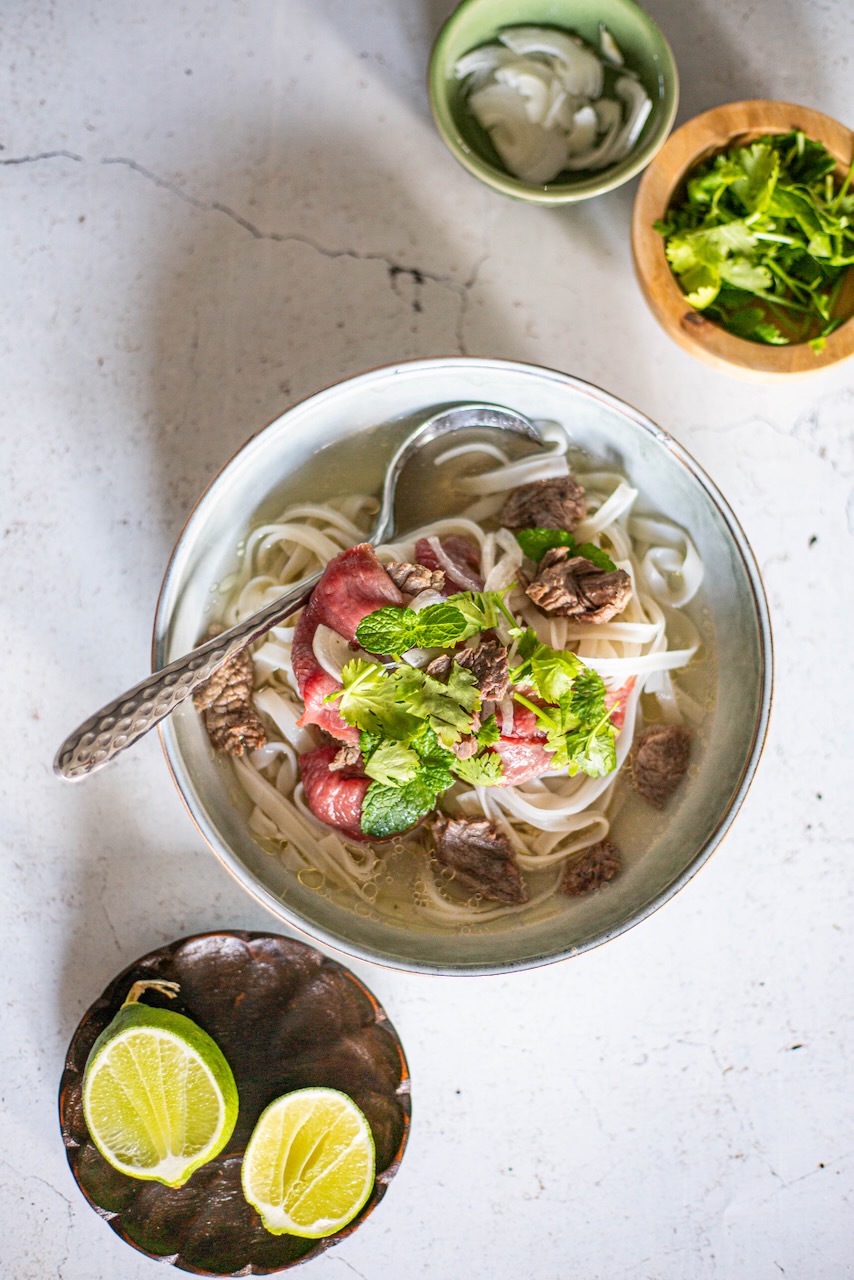
Pho bo (beef pho, pronounced « feu » precisely) combines a richly aromatic broth, rice noodles, beef, and a variety of herbs and toppings.
What gives this dish its character is, of course, the broth. Typically based on beef stock, it features aromatics and spices such as star anise, cinnamon, ginger, and coriander. The result is complex, fragrant, and delightfully delicate.
What I particularly enjoy in pho is this contrast: the broth can be richly aromatic without feeling heavy on the palate.
A story born in Vietnam at the end of the 19th century
Pho is now considered one of Vietnam’s iconic dishes, but its history is relatively recent.
Its origins are generally traced back to northern Vietnam, with Nam Dinh often regarded as its birthplace and Hanoi as the city where the dish truly developed and gained fame.
The first forms of pho appeared at the end of the 20th century, during the French colonial period.
The history of the dish is particularly intriguing, as it reflects the interactions between different culinary cultures.
The increase in beef consumption in Vietnam greatly contributed to the availability of beef bones, which were then used to enhance the broths. Pho is believed to have gradually evolved from noodle dishes accompanied by buffalo meat before beef became the signature ingredient of the recipe.
By the 1930s, pho vendors had become commonplace in the streets of Hanoi. These small mobile eateries, sometimes set up as early as dawn, played a significant role in integrating pho into the daily lives of the Vietnamese.
Pho, a soup that can be enjoyed at any time
Contrary to what one might assume in France, pho is not exclusively associated with dinner.
In Hanoi, in particular, pho is traditionally consumed at breakfast, although it can certainly be enjoyed at other times of the day.
Restaurants and vendors serve bowls on demand, with boiling broth poured directly over the noodles and meat.
I truly appreciate the notion of a dish that can be savored first thing in the morning.
A large bowl of hot broth, rice noodles, beef, and fresh herbs is a breakfast that can certainly sustain you!
Plus, there’s something very communal about this way of enjoying pho. Everyone can customize their bowl according to their tastes, adding lemon, chili, fresh herbs, or various sauces depending on regional habits.
A family recipe passed down by Kim
Now, let’s return to the story of my recipe.
As I mentioned earlier, it’s Kim, one of my subscribers, who sent me this family recipe.
I find it quite wonderful what social networks enable when they are used to share what we love.
While we often discuss their negative aspects, which undoubtedly exist, they also provide a tremendous platform for sharing culinary traditions.
One person shares a recipe with another, who cooks it, and eventually passes it on to their loved ones… Sometimes, a dish that was once prepared in a family kitchen on the other side of the world finds its way into our own kitchen.
This is precisely what I love about cooking: it travels, it connects, and it creates bonds.
So, thank you, Kim, for this lovely food journey! You can find her on Instagram: @Kim.en.cuisine
The secret of pho: a broth rich in flavors
When preparing pho, the broth takes center stage.
It requires time to develop its aromas. Spices are crucial here: star anise, cinnamon, ginger, coriander, and other herbs will gradually infuse the broth, imparting that signature flavor that is easily recognizable.
The goal is not necessarily to create an intensely powerful broth. On the contrary, the charm of pho lies in its balance.
Each note should be distinguishable, with no single spice overwhelming the others.
This balance gives the soup its sophisticated profile. The minimum cooking time for the broth is one hour; however, I recommend allowing it to simmer on low heat for 2-3 hours. You’ll see…
A complete and nutritionally interesting soup
In addition to its delightful taste, pho also brings together several food groups in one bowl.
Rice noodles primarily provide carbohydrates, an essential energy source. The beef adds protein as well as iron, zinc, and vitamin B12.
Fresh herbs, onions, ginger, and other toppings contribute vitamins, minerals, and aromatic compounds to the dish.
Of course, the precise nutritional composition will depend on the amounts of meat, noodles, broth, and toppings used, but the fundamental principle of pho allows for a particularly complete meal.
And above all, it’s a pleasant way to eat: a large warm bowl, nourishing, fragrant, and filled with varied textures.
The broth, the noodles, and the beef: a lovely balance
What I particularly love about this soup is the balance among the different elements.
The rice noodles are soft and pliable.
The beef adds character and a firmer texture.
The broth envelops everything with its aromatic spices.
And then the fresh herbs revive the entire dish.
The result is a soup that offers multiple sensations at once: hot, fresh, tender, crunchy, flavored, and tangy. It’s a true culinary experience in itself.
A Vietnamese cuisine that varies by region
Like many great traditional dishes, pho does not have just a single form.
There are notable differences between the northern and southern versions of the dish.
Pho de Hanoi is celebrated for its simplicity and balance, featuring a relatively subtle broth and limited garnishes. In the south, the accompaniments are generally more plentiful, and the broth can be sweeter, with a greater selection of herbs and sauces offered at the table.
This is what makes family recipes so fascinating.
A recipe can carry its own unique identity while still belonging to a broader culinary tradition.
There may not be a single « true pho. » There are diverse stories, regions, families, and customs.
A perfect soup for cold weather
While pho can certainly be enjoyed year-round, I find it especially comforting in colder weather.
A large steaming bowl before you, the aroma of spices wafting through the kitchen, and the fresh herbs added just before serving…
It’s incredibly comforting.
Unlike some rich and thick soups, pho remains pleasant in the mouth, thanks to its clear broth and the freshness imparted by the herbs and additional condiments.
Thus, it is precisely the type of dish I love to prepare when I want something warm but not heavy.
The necessary utensils
A cutting board,
One good paring knife,
A large pot (or a stockpot),
One skimmer,
A pot for cooking noodles
And that’s it!
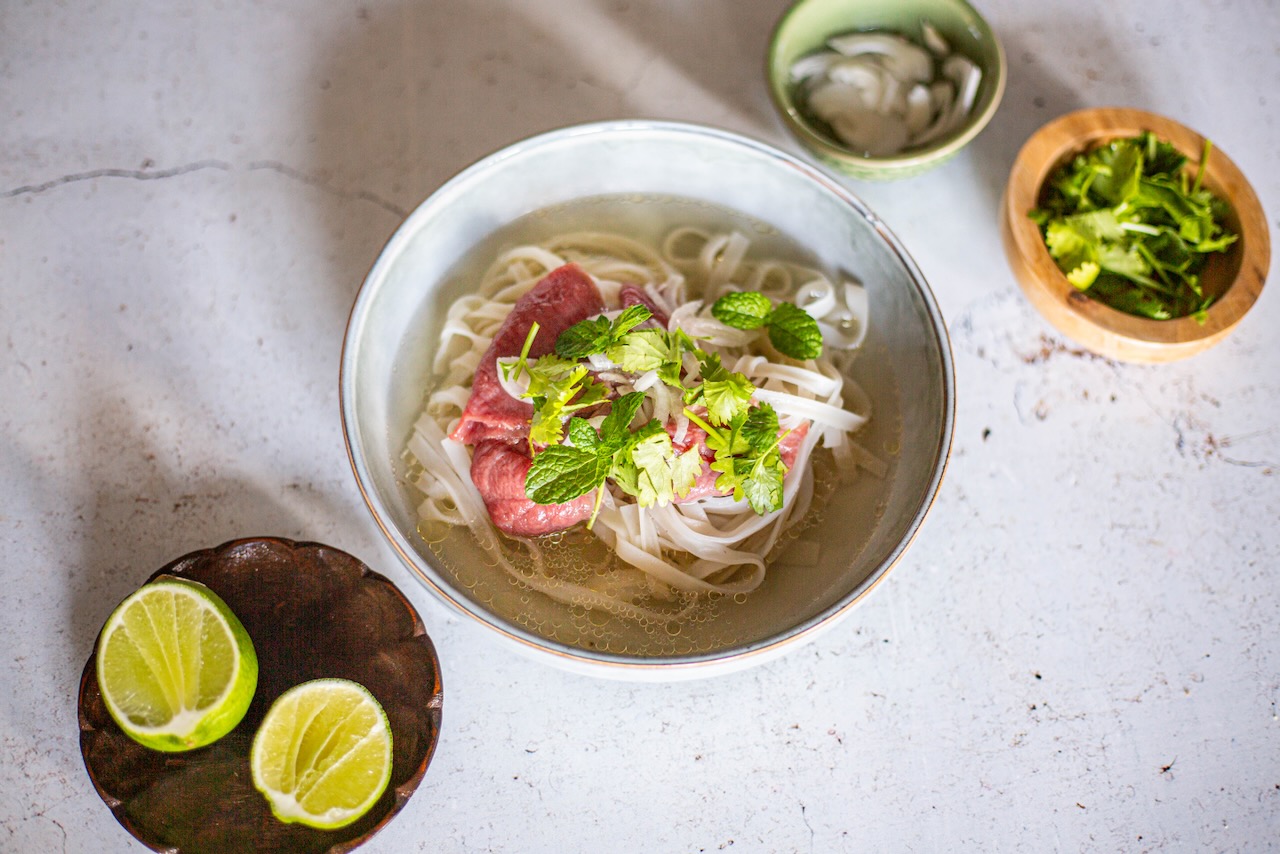
Pho, a recipe that tells a story
Ultimately, perhaps what I cherish most about this recipe is this very aspect.
Pho is not merely a beef noodle soup.
It’s a dish that narrates a story: that of a country, its culinary influences, its markets, its street vendors, and its families.
And now, it also encapsulates a little story of Casserole & Chocolate, since this recipe was passed on to me by Kim.
It beautifully illustrates what I adore about sharing recipes: we transfer not just a method of cooking but also a memory, a tradition, and an emotion.
In the end, perhaps that’s why we love cooking so much.
Because a dish can transport us far and wide without even leaving our kitchen.
So thank you, Kim, for this recipe and for this little journey to Vietnam.
Now it’s your turn to experience this beef pho, to savor its aromatic broth, and to make this beautiful recipe your own.
The recipe, Chef!
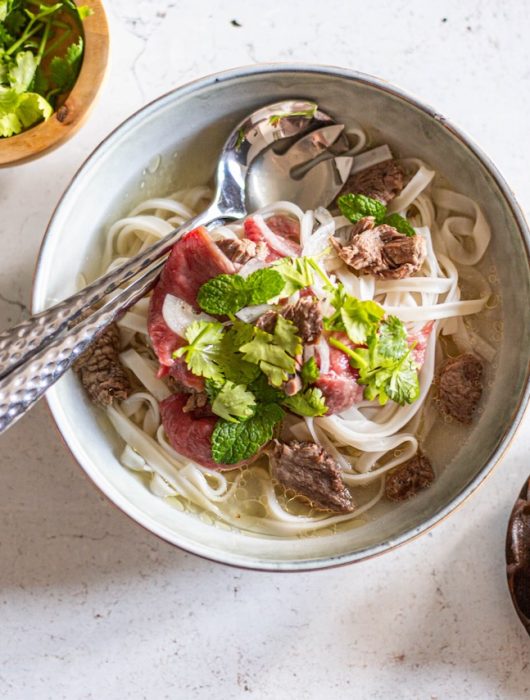
Beef Pho Soup

 ( Vote !)
 Loading...
A beef pho soup, broth made from shank and marrow bones flavored with cinnamon and star anise, topped with rice noodles, sirloin, and cilantro.
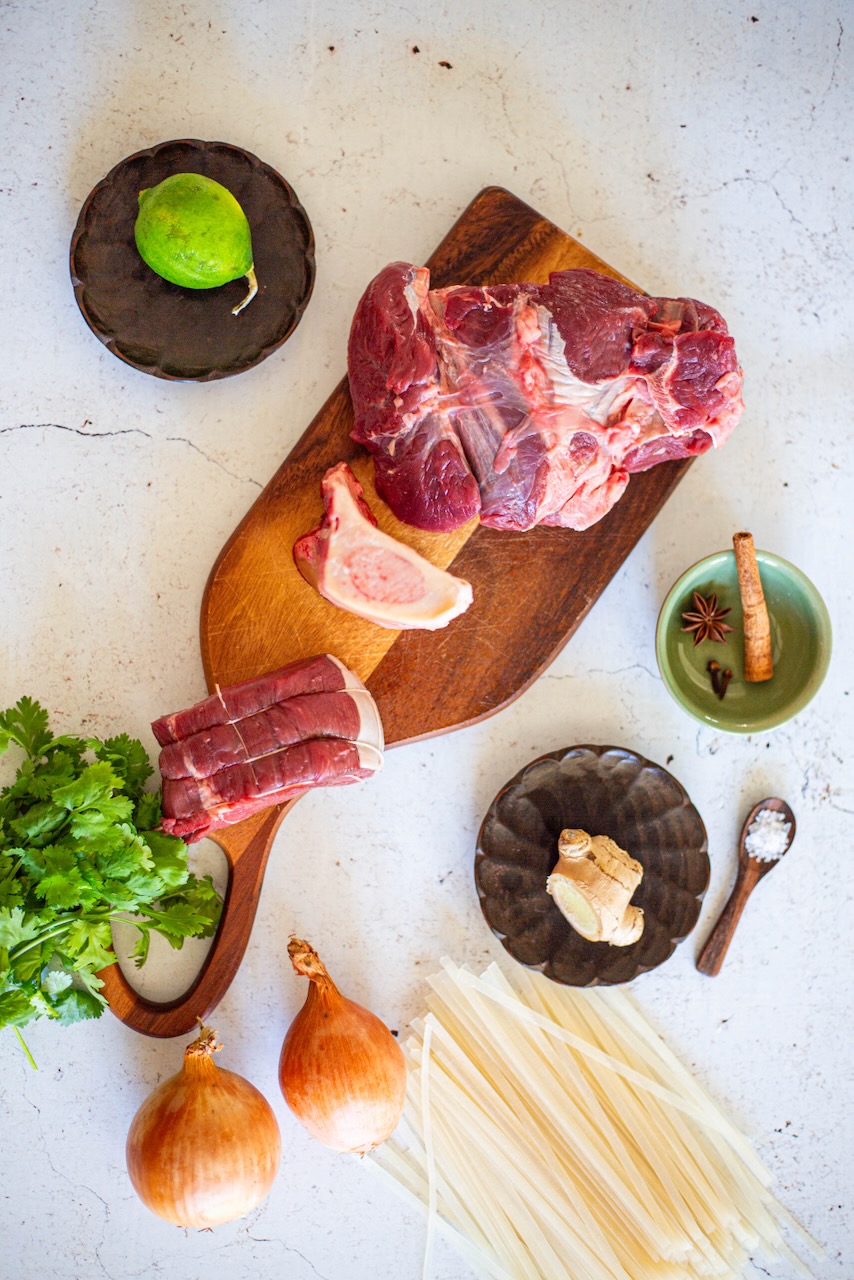
Ingredients
- Broth
- 1 piece of beef shank weighing 400-500 g
- 1 marrow bone
- 1 cinnamon stick
- 1 star anise
- 2 cloves
- 1 yellow onion
- 1 teaspoon of coarse salt
- 1/4 teaspoon of freshly ground pepper
- 2.5 l of water
- Finishing
- 250 g of rice noodles
- 200 g of rump steak
- 1 fresh white onion
- 1 large handful of fresh coriander
- A few mint leaves (optional)
- Fish sauce
Instructions
Broth
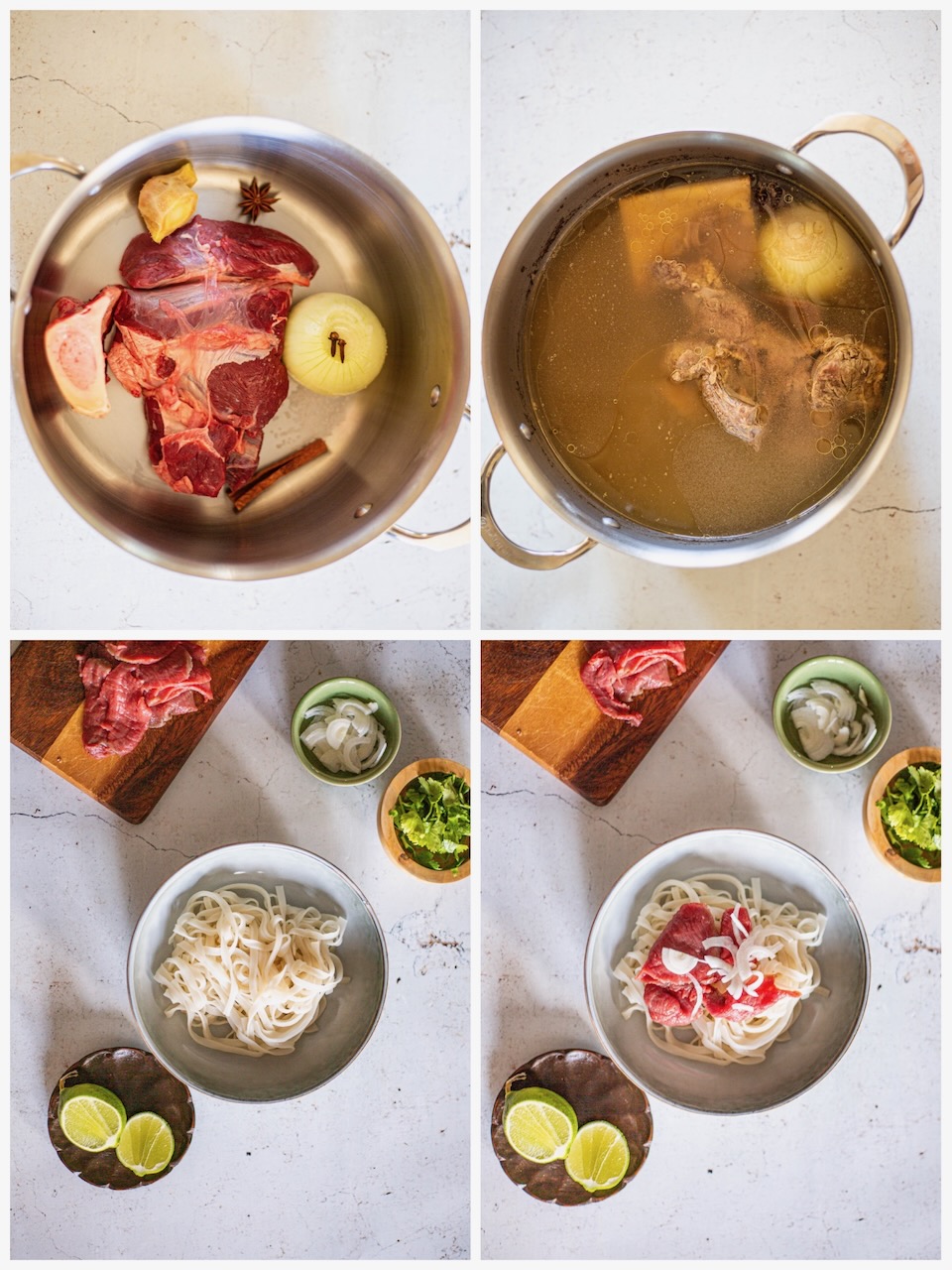
Put all the ingredients in a large pot.
Bring to a boil, then cover and let it cook at a gentle simmer for at least an hour. (For meat that shreds, cook for 2 to 3 hours.)
After this time, remove all solid elements from the broth with a ladle.
Mash or cut the meat and return it to the broth.
Finishing
Cook the rice noodles according to the package instructions.
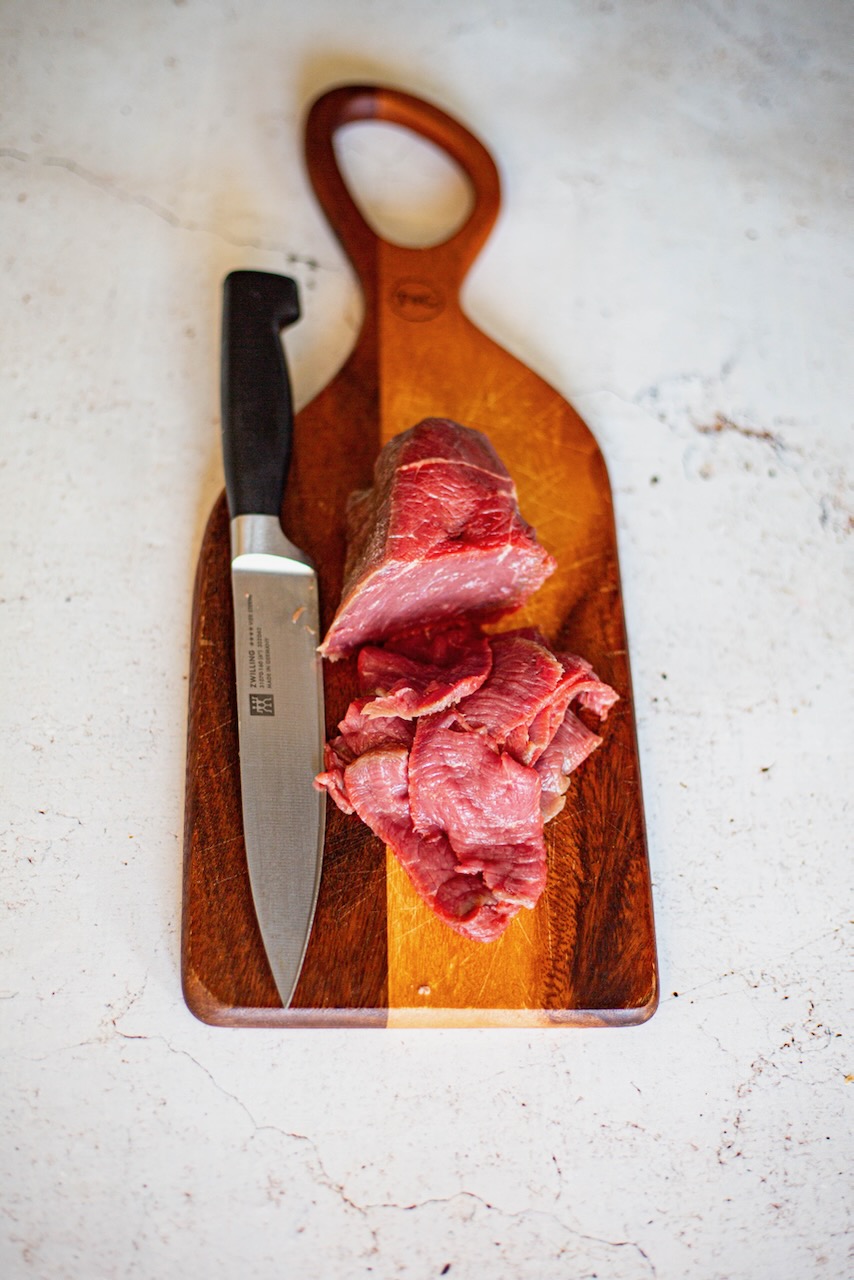
Cut the rump steak into very thin slices.
Place some noodles in your plate.
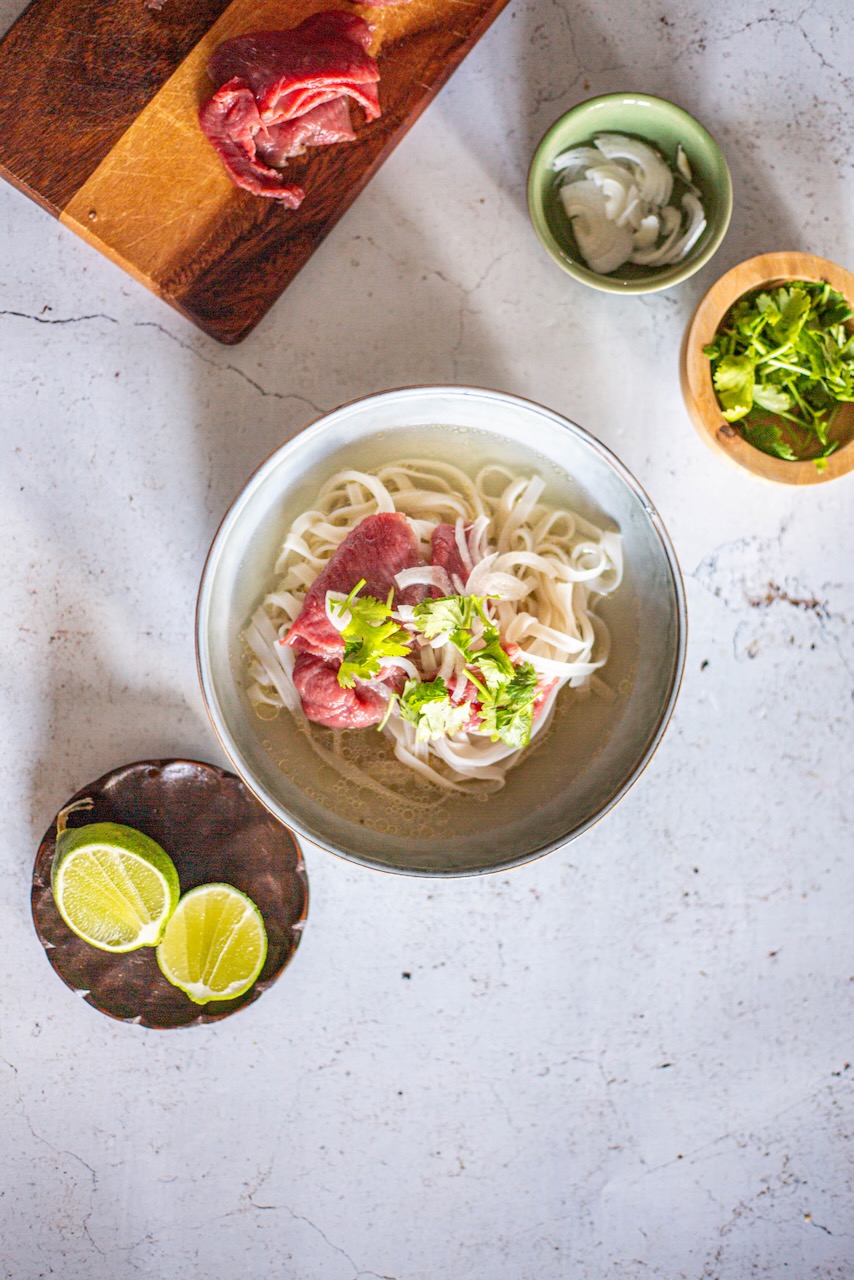
Add a few slices of rump steak on top and some thinly sliced onion.
Pour 2 or 3 ladles of very hot broth (with the shank) and mix well.
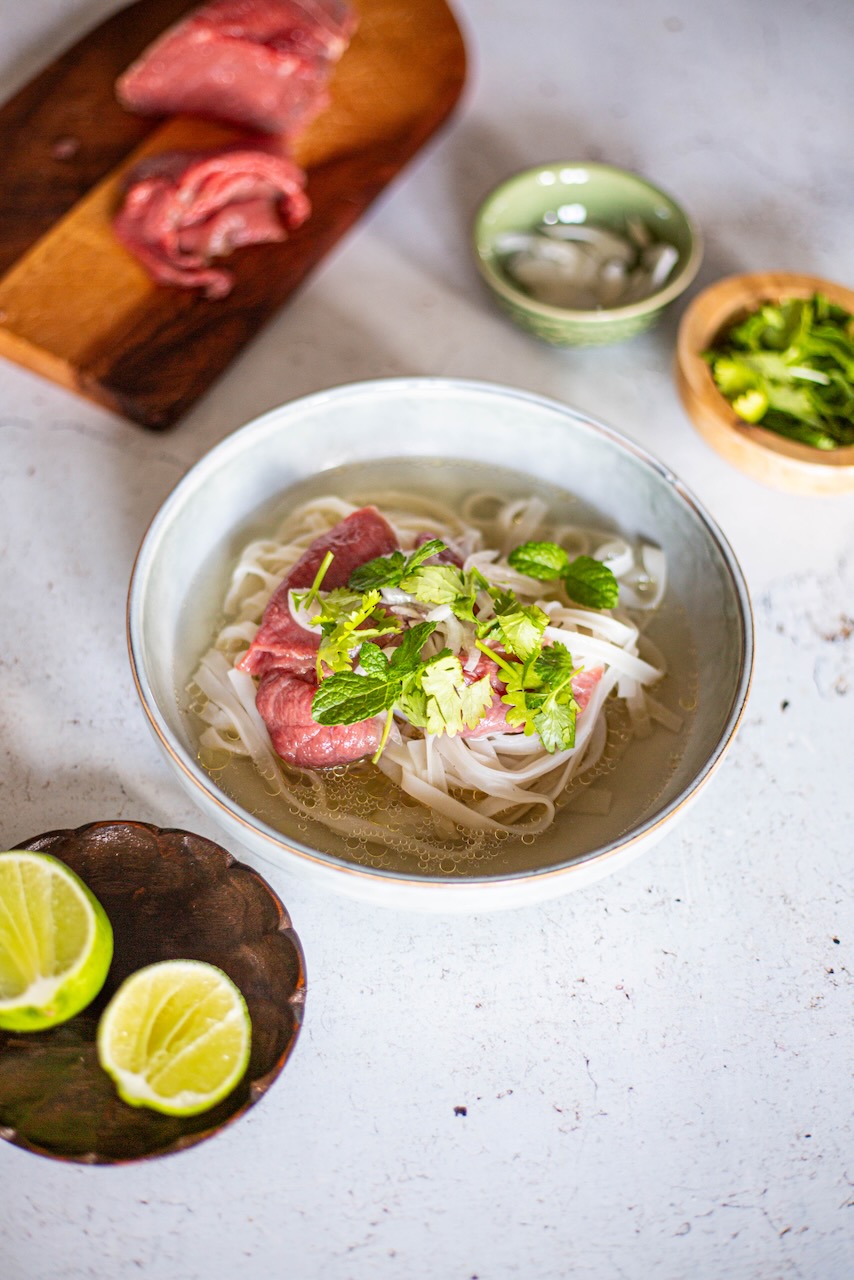
Enjoy with a squeeze of lime, a few leaves of coriander (and mint), and a teaspoon of nuoc mam.
FAQ
What is pho?
Pho is a Vietnamese soup traditionally made with a fragrant broth, rice noodles, meat, and fresh herbs. Pho bo is the beef version.
What is the origin of pho?
Pho originated from northern Vietnam. Nam Dinh is often considered its birthplace, while Hanoi played a major role in its development and popularization from the late 19th century.
What spices are used in a pho broth?
The beef pho broth is traditionally flavored with various spices and herbs, including star anise, cinnamon, ginger, and coriander. The compositions may vary depending on family recipes and regions.
Is pho a complete dish?
Yes. A bowl of pho generally combines rice noodles, beef, a broth, and various herbs and toppings. It thus provides carbohydrates and proteins, along with nutrients from the spices and fresh herbs.
When do people traditionally eat pho in Vietnam?
Pho is particularly associated with breakfast in Hanoi, but it is also enjoyed for lunch or dinner. Pho stalls can serve this soup at various times throughout the day.
What is the difference between northern and southern pho from Vietnam?
The northern version, especially that of Hanoi, is known for its more subtle and balanced broth. In the south, pho is typically served with more herbs, condiments, and sauces, featuring a broth that can be sweeter and milder.

No Comments